The post Breathwork Offers a Universally Accessible Tool for Transformation: Guy W Fincham, Founder of Brighton & Sussex Breathwork Lab appeared first on Global Wellness Institute.
]]> | @psyche.the.magazine Guy W. Fincham, PhD
“Each breathwork technique serves different purposes, from relaxation and balance, to energisation, or moving between the states. As a participant in workshops and conferences, I’ve witnessed its transformative power firsthand. Participants often describe experiences of clarity, emotional release and deep connection – experiences starting to be backed by emerging data.
Breathwork’s mechanisms are rooted in its ability to influence the autonomic nervous system. For example, by modulating the vagus nerve, slow breathwork activates the parasympathetic branch of the autonomic nervous system (responsible for ‘rest and digest’ functions), reducing heart rate and promoting relaxation. Coherent breathing optimises heart rate variability, a key marker of stress resilience.
In contrast, fast breathwork methods trigger transient hypoxia and a release of adrenaline, effectively inducing an acute stress response – a hormetic effect – where short-term activation of the sympathetic nervous system (the one that triggers the ‘fight or flight’ response) may build long-term stress tolerance. Techniques such as high-ventilation breathwork may even produce altered states of consciousness akin to those invoked by psychedelics like psilocybin, potentially unlocking psychological insights or emotional release.”
Link to the article: https://psyche.co/ideas/i-was-sceptical-about-breathwork-so-i-did-my-own-research
The post Breathwork Offers a Universally Accessible Tool for Transformation: Guy W Fincham, Founder of Brighton & Sussex Breathwork Lab appeared first on Global Wellness Institute.
]]>The post 5 Effective Ways Breathing Supports Healthier Heart via Oxygen Advantage appeared first on Global Wellness Institute.
]]>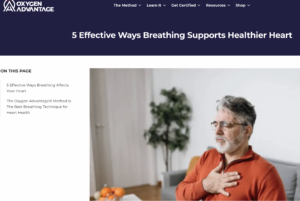
1. CO₂ balance reduces cardiac strain
2. Breathing improves heart rate variability (HRV)
3. Strengthens vagal tone
4. Helps normalize blood pressure
Full article: https://oxygenadvantage.com/blogs/blog/ways-breathing-supports-healthy-heart?utm_source=Klaviyo&utm_medium=email&utm_campaign=5+Ways+Breathing+Impacts+Your+Heart+blog&_kx=8JHHSkA8b4zczg77MsJUExagxFtdtiHiz9ZhD2GyPvE.WnfgCK
The post 5 Effective Ways Breathing Supports Healthier Heart via Oxygen Advantage appeared first on Global Wellness Institute.
]]>The post Dr. Jonathan Fisher : Depression Changes How Your Heart Beats appeared first on Global Wellness Institute.
]]>Depression changes how your heart beats. Not metaphorically—physiologically. When you’re depressed, your heart loses its natural rhythm variations. Instead of speeding up and slowing down flexibly throughout the day—responding to stress, relaxation, connection—it beats more rigidly, mechanically. This change, measured as reduced heart rate variability (HRV), signals that depression has altered your nervous system’s fundamental functioning.
Why does this matter? Because heart rate variability predicts cardiovascular health more accurately than blood pressure or cholesterol.People with depression show 30 percent lower heart rate variability¹. This helps explain why they face increased risk of heart disease, comparable to traditional risk factors like diabetes.
The good news? As depression improves, heart rhythm patterns often restore. Understanding this connection empowers us to protect both emotional and cardiovascular health together.
The Physical Reality of Depression
Depression is a medical condition that affects the entire body, not just mood.
Doctors diagnose depression when several symptoms—sadness, fatigue, sleep disruption, loss of interest, changes in appetite, difficulty concentrating, or feelings of worthlessness—persist for two weeks or more.
But here’s what psychiatrists might not measure: the cardiovascular changes happening simultaneously.
Research shows that depression triggers measurable physical changes². Inflammatory markers like C-reactive protein and interleukin-6 increase 30-40 percent. These same markers contribute to atherosclerosis. Cortisol patterns reverse—staying high at night when they should drop, remaining low in morning when they should rise. Blood becomes more prone to clotting. Arteries lose flexibility.
One in five people experience depression. Women face twice the risk of men. Yet few realize their heart health is also at stake during these episodes.
One in five people experience depression. Women face twice the risk of men. Yet few realize their heart health is also at stake during these episodes.
What I See in My Practice
Dr. James Connors, a 54-year-old surgeon, came for cardiac screening at his wife’s urging. His father had died young of heart disease, and she worried about James’s exhaustion since losing a patient three years earlier. “I sleep poorly,” he told me. “Wake at 3 AM. No energy. Still operating well, but everything feels like effort.” His presentation—fatigue, sleep disruption, emotional withdrawal—reminded me of countless patients where depression and cardiac risk intertwine. The body keeps score in ways we’re only beginning to understand.
How Depression Affects Your Heart
Think of heart rate variability like a fluid jazz performance versus a metronome. A healthy heart improvises constantly—quickening with inspiration, slowing with rest, responding to each moment. Depression shuts down a healthy hearts’ natural ability to improvise.This happens through several pathways:
Your nervous system shifts into a defensive mode. The vagus nerve, which normally helps your heart respond flexibly, becomes underactive. Your sympathetic nervous system—the fight-or-flight response—stays partially activated even at rest. This is why your heart beats more rigidly.
Inflammation increases throughout your body. The same inflammatory chemicals that affect brain function also damage blood vessels. It’s not dramatic—it’s a slow, persistent process that accumulates over years.
Stress hormones remain elevated. Cortisol and adrenaline, meant for brief emergencies, circulate continuously. This affects blood pressure, blood sugar, and vessel health.
Recovery systems shut down. During depression, the body’s natural repair mechanisms—which normally activate during sleep and relaxation—work less effectively. This includes the processes that maintain healthy arteries and optimal heart function.
A 2024 meta-analysis found that exercise alone reduces depression as effectively as antidepressants for many people⁴. But here’s what matters more: these changes are reversible.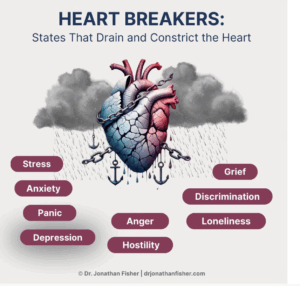
The post Dr. Jonathan Fisher : Depression Changes How Your Heart Beats appeared first on Global Wellness Institute.
]]>The post Via Kourtney Kardashian’s POOSH site: A Well Regulated Nervous System is the New Power Move appeared first on Global Wellness Institute.
]]>A Well Regulated Nervous System is the New Power Move
What is nervous system regulation?
In short, it’s your body’s ability to come back to center after stress. Nervous system regulation is the foundation of sustainable success and emotional intelligence,” Sepideh says. “When regulated, the nervous system supports clarity, creativity, connection, and presence. Regulation isn’t about avoiding stress; it’s about cultivating the capacity to respond with resilience.”
- “Breathwork is powerful because it bypasses the thinking mind and works directly with the body’s stress circuitry,” Sepideh tells us. “It calms the amygdala, activates the vagus nerve, and restores a sense of safety. In that space, you begin to remember your worth, not as an idea, but as an embodied truth.”
- “In a world that profits off your disconnection, breathwork is a quiet rebellion, a radical act of presence, a return to what’s real.”
The post Via Kourtney Kardashian’s POOSH site: A Well Regulated Nervous System is the New Power Move appeared first on Global Wellness Institute.
]]>The post Optimal Breathing Webinar appeared first on Global Wellness Institute.
]]>Hosted by: Sandy Abrams, Chair of the Global Wellness Institute Breathe Initiative
We’re excited to share this dynamic conversation between two global leaders in Breath education: Peter M. Litchfield, Ph.D., President of the Professional School of Behavioral Health Sciences and CEO of Better Physiology Ltd. and Patrick McKeown, CEO and Director of Education and Training at Oxygen Advantage®, Director of Education and Training at Buteyko Clinic International and President of Buteyko Professionals International.
We’ll explore how both your breathing habits and your physiology play a powerful role in shaping how you feel—mentally and physically. You’ll gain easy-to-understand insights and simple, science-backed tools to help you breathe better and feel better—every day.
The post Optimal Breathing Webinar appeared first on Global Wellness Institute.
]]>The post ‘How Should I Breathe?’ Article by Anders Olsson of Conscious Breathing Institute appeared first on Global Wellness Institute.
]]>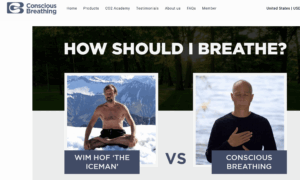 comparing two of the most popular Breath practices which have completely different effects on the mind & body –Buteyko and Wim Hof Method.
“Ever since I founded Conscious Breathing in 2009, people’s interest in breathing as a health promoter, performance enhancer and a way to personal and spiritual growth has increased more and more, which brings me much joy. In yoga, meditation, mindfulness, and qigong, different breathing techniques are central. Perhaps you’ve heard of the Buteyko breathing method? It’s a Russian method that is spreading across the globe, founded by the late Professor Konstantin Buteyko. Rebirthing and Holotropic breathing are two other popular ways of using breathing to change the state of mind and improve one’s health.
One of the methods that has attracted the most interest is the Wim Hof Method. Therefore, a common question is what makes Conscious Breathing different from Wim Hof breathing. Which way to breathe is correct? Which method is best? Is it possible to combine the two?”
Full article: https://www.consciousbreathing.com/blogs/co2-academy/how-should-i-breathe-wim-hof-vs-conscious-breathing
The post ‘How Should I Breathe?’ Article by Anders Olsson of Conscious Breathing Institute appeared first on Global Wellness Institute.
]]>