The post The Missing Chapter at Work: Closing the Menopause Talent Gap appeared first on Global Wellness Institute.
]]>
Author: Talya Landau Bsc, CHC
Workplaces have spent the last two decades building policies that support maternity and early parenthood. But they skipped the next chapter: menopause. There is a conversation happening in millions of workplaces – in hushed tones, in hallway conversations, and during quick breaks between meetings. It is a conversation about hot flashes during board meetings, brain fog that erodes confidence, and exhaustion that makes even the most capable leaders question themselves. And most organizations still pretend it isn’t happening.
Caught Between Silence and Stigma
Over the past several decades, the progress of feminism has brought enormous gains, integrating women into a wide range of professions and leadership roles. At the same time, life expectancy has increased and careers have become longer. Together, these shifts have created a new reality the world of work has never fully confronted before: large numbers of experienced women are navigating menopause during the peak years of their professional impact. Yet workplace systems were not designed with this stage of life in mind.
In conversations with women in senior leadership and executives across organizations, the same pattern emerges again and again. On one side are highly experienced women – leaders with decades of expertise, navigating menopause quietly. Many do not want to appear weak. They worry about being perceived as less capable or less reliable. In workplaces that still reward constant strength and control, vulnerability can feel risky. So, they manage the experience privately. On the other side, HR leaders and executive teams often express a different dilemma. Many genuinely want to support women better. But they worry about unintended consequences. Would menopause policies reinforce stereotypes about women being unstable leaders? Would managers start quietly favoring younger employees? Could well‑intentioned support actually backfire?
These are not theoretical concerns. They reflect real tensions inside organizations trying to balance support with perceptions of fairness and performance. Interestingly, some of the strongest resistance to menopause policies sometimes comes from women themselves, who feel this is simply a personal issue they must manage on their own. The result is a difficult tension. Speak up about menopause and risk being seen as “high‑maintenance.” Stay silent and carry the physical and emotional load alone. Neither path is fair. And neither serves organizations.
Menopause is not a private problem to be managed quietly. It is a predictable life transition – much like pregnancy, parental leave, or recovery from surgery – that millions of people experience during what are often their most experienced and valuable professional years. When workplaces ignore this reality, symptoms are often misinterpreted. Difficulty concentrating becomes disengagement. Fatigue becomes a perceived loss of ambition. Requests for small adjustments are interpreted as “being difficult.” The result is real talent, real knowledge, and real leaders leaving organizations. For organizations investing heavily in performance excellence, leadership pipelines, and diversity initiatives, this represents a significant, and often invisible, loss of experience.
The Numbers That Should Wake Us Up
Menopause is not a single moment but a transition that can span several years. Perimenopause alone may last anywhere from two to ten years, often beginning in the 40s, and many women experience symptoms such as hot flashes, night sweats, disrupted sleep, fatigue, and changes in concentration or memory. These symptoms can directly affect daily work performance. This is not a niche issue. By 2030, the global population of menopausal and post‑menopausal women is projected to reach around 1.2 billion. Many of these women will be active members of the workforce, often in senior or highly skilled roles.
The economic implications are substantial. Research from the McKinsey Health Institute estimates that closing the global women’s health gap – with menopause as a major contributor – could add approximately 1 trillion US dollars to the global economy annually by 2040. Employee expectations are also shifting. A multi‑country survey from Catalyst found that 84% of respondents believe employers should provide more menopause support, and more than one‑third say their symptoms have already affected their work performance.
Despite business and economic implications, only a small percentage of organizations currently have formal menopause policies or workplace support structures in place. Legal and regulatory signals are also beginning to emerge. In the UK, employment tribunals have already ruled in favor of women who experienced harassment or unfair dismissal related to menopause symptoms, with some cases recognizing menopause‑related impairments as potential disabilities under the Equality Act. The UK is leading with binding legislation, and Australia, the United States, and EU nations are advancing policy frameworks and workplace guidance that embed menopause within occupational health and equality.
The Cultural Tipping Point
For decades, menopause remained largely invisible in public discourse. Today, it is increasingly discussed in mainstream media, podcasts, and professional forums. Clinicians, researchers, journalists, and women leaders are speaking more openly about the realities of midlife health. At the same time, a growing wave of femtech innovation is focusing specifically on menopause – from symptom‑tracking apps and wearables to virtual‑care platforms designed to support midlife women’s health. This reflects both the scale of the need and the expectation that this life stage should be taken seriously. For employers, this moment presents an opportunity to move from awareness to thoughtful, evidence‑based action.
Five Things Organizations Can Do
Policy – make menopause visible and legitimate
Formal policies signal that menopause is a recognized, legitimate workplace topic rather than a private burden. Effective policies typically:
- Define menopause and perimenopause as health transitions that may sometimes require adjustments, similar to pregnancy or other long-term conditions.
- Clarify the types of support and reasonable adjustments available, such as flexible work options, access to quiet spaces, or temporary changes in uniform.
- Outline confidentiality, documentation, and referral pathways, such as occupational health or employee assistance programs.
- Align with equality, health and safety, and anti-discrimination policies to reduce legal risk.
Flexibility – design work with variability and recovery in mind
Many menopause-related difficulties are episodic. Symptoms may flare unpredictably, especially around sleep disturbance, heavy bleeding, or mood changes. Employer case studies and workplace surveys, and industry reports, highlight the value of relatively small adjustments, such as:
- Flexible start and end times, especially after nights of poor sleep.
- Options for remote or hybrid work on challenging days.
- The ability to step away briefly from meetings or public-facing roles without penalty.
- Protected time for medical appointments and evidence-based treatment.
The goal is not to create a separate category of work for midlife women, but to design flexibility that is grounded in outcomes and available on a fair, transparent basis.
Leadership – equip managers for informed, humane conversations
Managers sit at the interface between policy and everyday experience. They do not need to diagnose or treat menopause, but they do need to:
- Understand that menopause can affect concentration, mood, energy, and confidence in ways that may show up in performance.
- Recognize when a change in behavior might have a health dimension and create space for confidential discussion.
- Use clear, compassionate language, focusing on what the employee needs to do their job sustainably.
- Work collaboratively to identify adjustments that support both the individual and the team.
Environment – make physical spaces work for midlife women
Physical environments can make symptoms either harder or easier to manage. Many helpful changes are low-cost and benefit a wide range of employees, not just those experiencing menopause. Examples include:
- Improving ventilation and access to fans or cooler spaces.
- Providing easy access to drinking water and restrooms.
- Allowing variations in dress code, for example lighter layers and breathable fabrics.
- Ensuring private spaces where employees can briefly cool down, rest, or change clothes.
When integrated into broader workplace design, these adjustments send a signal that the organization takes midlife health seriously.
Community – reduce isolation and normalize the conversation
Many women report feeling isolated or worrying that raising concerns about menopause at work will be seen as unprofessional. Global survey data from Catalyst suggest that employees are more likely to stay and perform well when they feel understood and not alone. Employers can help by:
- Creating voluntary employee resource groups or peer networks focused on midlife health.
- Hosting internal webinars or panels featuring medical experts and employees who choose to share their experiences.
- Posting signage about high-quality, evidence-based resources rather than commercial products.
- Involving allies of all genders and ages to avoid framing menopause as a “women-only problem.”
Conclusion
Organizations that address menopause thoughtfully will do more than expand their benefits offering. They will protect institutional knowledge, strengthen leadership continuity, and build workplaces that support employees across the full arc of their careers. Addressing menopause at work contributes directly to closing the broader women’s health gap. Menopause doesn’t have to remain the missing chapter of working life. Not if we choose to write it.
Supporting References
Delanerolle G, et al. Menopause: A Global Health and Wellbeing Issue That Needs Urgent Attention. The Lancet. 2025; 13(2): E196-E198.
D’Angelo S, et al. Impact of Menopausal Symptoms on Work. International Journal of Environmental Research and Public Health. 2022; 20(1):295.
McKinsey Health Institute. Closing the Women’s Health Gap: A $1 Trillion Opportunity to Improve Lives and Economies. January 17, 2024.
Pritchard J. 5 Ways Employers Can Get Ahead with Menopause Action Plans. Reward & Employee Benefits Association. January 13, 2026.
The Menopause Society. Menopause and the Workplace: Consensus Recommendations from The Menopause Society. The Journal of The Menopause Society. 2024; 31(9): 741-749.
UK Equality and Human Rights Commission. Menopause in the Workplace: Guidance for Employers. February 2024, Updated August 2025.
About the Author
Talya Landau is a Workplace Wellbeing Strategist and Keynote Speaker, and the founder of Shmone — a wellbeing company specializing in Strategic Wellbeing Programs, energy renewal, and burnout prevention. Drawing from her experience as Global Wellbeing Manager at Wix.com and Director of Innovation at Amdocs, she helps companies worldwide drive real change in the future of work. Talya is passionate about making a difference through proactive health and wellbeing initiatives. She is an active member of the Global Wellness Institute’s Workplace Wellbeing Initiative.
**Disclaimer**
The blog submissions featured on this site represent the research and opinions of the individual authors. The Global Wellness Institute and the Workplace Wellbeing Initiative are not responsible for the content provided. The views expressed are solely those of the authors and do not necessarily reflect the official policy or position of the Global Wellness Institute or the Workplace Wellbeing Initiative. Readers are encouraged to consult with a qualified healthcare professional for specific health concerns.
The post The Missing Chapter at Work: Closing the Menopause Talent Gap appeared first on Global Wellness Institute.
]]>The post From Wellness Programs to Workplace Transformation: How Leading Organizations Are Rethinking Workforce Wellbeing appeared first on Global Wellness Institute.
]]>
By Jessica Grossmeier, PhD, MPH
For those who lead wellbeing initiatives in their organizations, a familiar frustration often emerges: launching programs employees genuinely want, measuring participation, tracking engagement, yet still wondering why the needle barely moves on burnout and stress. This challenge is widespread. According to McLean & Company’s 2025 research, only 43% of employees say their company’s wellbeing programs effectively meet their needs. Burnout affects 83% of workers, and employee engagement dropped from 88% to 64% in just one year (DHR Global, 2026).
The gap isn’t about effort or quality. Organizations invest heavily in meditation apps, gym memberships, resilience training, and mental health resources. These programs provide real value to individual employees, but they can’t fully counteract a work environment that generates stress faster than any program can address it.
Why Individual Programs Reach Their Limits
Individual wellness programs provide important support, but they operate within constraints when workplace conditions themselves create strain. Think about the logic: programs help employees build resilience and coping skills, which matters. Yet those same employees return to environments where the sources of stress remain unchanged.
Consider a common scenario: an organization offers stress-management workshops while teams operate while understaffed. Employees attend the workshop, learn valuable breathing techniques and mindfulness practices, then return to 60-hour weeks with compressed deadlines. Even with the best intentions, the implicit message can become problematic: wellbeing is something individuals manage on their own, not something organizations address together through how they structure work.
The World Health Organization’s 2022 guidelines on mental health at work recommend that organizations implement interventions targeting working conditions alongside individual support, rather than relying primarily on individual resilience. This dual approach recognizes that both elements contribute to workforce wellbeing, and both deserve attention and resources.
Building on Individual Programs with Systemic Support
The good news is that individual programs need not be abandoned or declared ineffective. Rather, the opportunity lies in enhancing their impact by also addressing how work gets designed and managed. This means examining job design, workload distribution, leadership practices, decision-making autonomy, and team dynamics alongside the individual resources organizations already provide.
A meta-review of more than 50 systematic reviews (covering 957 studies in total) found that organizational interventions improve employee well-being more reliably than individual programs alone. The strongest results came from changes to work schedules and job design. More importantly, combining organizational changes with individual support created longer-lasting improvements than either approach in isolation.
The Work Wellbeing Playbook, developed by the World Wellbeing Movement in collaboration with the University of Oxford Wellbeing Research Centre and Indeed, synthesized 3,000+ academic studies to identify six core drivers of workplace wellbeing: development and security, workplace relationships, independence and flexibility, variety and fulfillment, earnings and benefits, and risk/health/safety. These drivers don’t operate independently. A flexible schedule matters less if the workload is crushing. Fair pay helps, but not if the work feels meaningless. Effective wellbeing strategies address multiple drivers simultaneously, recognizing how they interact within specific workplace contexts.
What This Looks Like in Practice
Some organizations are moving beyond piecemeal wellness programs to build wellbeing into how they operate. Their approaches vary based on industry, size, and culture, but share common elements worth examining.
Making Leadership Accountable
Novo Nordisk measures psychosocial risk through regular surveys tracking influence, recognition, meaningfulness, social support, predictability, and balanced demands. In 2024, they set measurable targets for executives to reduce stress levels by 10% year-over-year across their business units. This creates accountability that goes beyond telling managers to “support wellbeing” without defining what that means or tracking results.
Using Data to Find Problems
Banca Transilvania tracks 15 work-related factors through their Employee Engagement Index, including work-life balance, workload stress, process efficiency, and resource availability. Results get shared at team, department, and director levels. Managers review findings with their teams and identify specific improvements. This approach works because it surfaces real issues (insufficient staffing to handle current demand) rather than generic concerns (need for better wellness benefits).
Redesigning Work, Not Just Offering Flexibility
Research shows that work design changes, including workload redistribution, flexible schedules, and autonomy, drive well-being more than perks alone. Organizations like Microsoft and Salesforce treat flexible work as essential to performance, not a perk. Employees get autonomy to manage schedules and locations in ways that let them meet performance goals without sacrificing wellbeing. Microsoft’s Viva Insights platform supports focused work time, meeting-free days, and boundaries around communication. The distinction matters: flexibility means employees can work from home, but redesign means the work itself is structured so they’re not checking email at 10pm regardless of location.
Building Connection Into Work
Leading organizations recognize that workplace relationships are a key driver of wellbeing and performance. They build opportunities for community and connection into work processes and create expectations for conduct that fosters respect, fairness, and collaboration. For example, Accenture has designed office spaces that balance privacy, collaboration, social time, and meetings. But physical space is only part of their approach. Policies cover inclusive dress codes, respectful conduct, community involvement, flexible arrangements, and spaces supporting diverse needs (wellness rooms, interfaith rooms, lactation rooms, all-gender restrooms). The goal isn’t just allowing connection but creating conditions where it naturally develops.
Linking Wellbeing to Business Outcomes
Organizations getting this right measure wellbeing outcomes and connect them to business results. They use employee surveys, pulse checks, engagement scores, and focus groups to track satisfaction, engagement, burnout, work-life balance, and overall wellbeing. Then they link these to employee performance, productivity, financial results, and company reputation.
This creates a business case that resonates with executives who need proof that wellbeing investments deliver returns. Recognition programs like Fortune 100 Great Place to Work, the Health Project’s C. Everett Koop National Health Award, and the Global Healthy Workplace Award identify organizations taking systemic approaches rather than just offering good benefits packages.
The Real Challenges of Implementation
The case examples above are inspiring, but they don’t reveal the journey and commitment required. Most organizations featured in wellbeing articles spent years building these systems. They navigated budget constraints, secured executive buy-in, tested solutions through pilot programs, and addressed employee skepticism stemming from previous wellness initiatives that promised more than they delivered.
Wellbeing leaders face similar challenges that deserve direct acknowledgment. Small organizations can’t simply replicate a Fortune 100 organization’s approach without thoughtful adaptation. A 50-person company doesn’t need executive stress-reduction targets by business unit, as it likely operates as a single unit. But the underlying principle still applies: assign accountability for specific wellbeing outcomes and measure progress.
The organizational dynamics can be complex. Redesigning jobs requires collaboration with managers who built successful careers in current systems and may have valid concerns about change. Flexible work policies sometimes face resistance from leaders who associate physical presence with productivity, often based on their own experience. Measuring psychosocial risk can surface issues that require budget allocation, which becomes difficult when wellbeing isn’t yet connected to measurable business outcomes in an organization’s strategic planning.
A Practical Starting Point
Wellbeing leaders can begin expanding their approach while maintaining the individual programs their employees value. Consider starting with one work condition that creates measurable strain. This might be meeting overload, unclear priorities, or chronic understaffing. Choose something specific that data can confirm and that leaders in the organization have the influence to address. Design a pilot that changes this condition rather than only offering resources to cope with it. Measure both wellbeing outcomes and business metrics that matter to the leadership team. Use what emerges to build the case for broader systemic changes.
Organizations making meaningful progress on workforce wellbeing share an important characteristic: they’ve broadened their view of wellbeing from an HR program to a business strategy. This shift requires patience, collaborative relationships across the organization, and willingness to surface and address difficult truths about working conditions. The journey takes time, but it creates lasting improvements rather than temporary engagement that fades when underlying conditions remain unchanged.
Individual wellbeing programs become significantly more effective when they support employees who work in sustainable, well-designed environments. The combination of individual resources and systemic improvements creates conditions where people can genuinely thrive. That’s the difference worth pursuing.
About the Author
Jessica Grossmeier is an award-winning researcher, speaker, and author of two books: Reimagining Workplace Well-being and Well At Work. As a leading authority in workforce well-being, she collaborates with employers and well-being service providers to create evidence-based strategies to support individual and organizational thriving. Recognized as one of the most influential women leaders in health promotion by the American Journal of Health Promotion, Jessica serves as a Senior Fellow for the Health Enhancement Research Organization, Strategic Advisor-ROI of Care for Compassion 2.0, Chairs the Workplace Wellbeing Initiative of the Global Wellness Institute, and serves on several advisory boards. For more information: www.jessicagrossmeier.com
**Disclaimer**
The blog submissions featured on this site represent the research and opinions of the individual authors. The Global Wellness Institute and the Workplace Wellbeing Initiative are not responsible for the content provided. The views expressed are solely those of the authors and do not necessarily reflect the official policy or position of the Global Wellness Institute or the Workplace Wellbeing Initiative. Readers are encouraged to consult with a qualified healthcare professional for specific health concerns.
The post From Wellness Programs to Workplace Transformation: How Leading Organizations Are Rethinking Workforce Wellbeing appeared first on Global Wellness Institute.
]]>The post Conversations That Are Reimagining the Future of Work appeared first on Global Wellness Institute.
]]>
Guest Author: Laura Putnam, MA
A LinkedIn Live Wellbeing at Work Series in Partnership with the Global Wellness Institute
This past year, I had the honor of hosting a series of LinkedIn Live conversations in partnership with the Workplace Wellbeing Initiative of the Global Wellness Institute.
Each conversation tackled a defining question of our time. Why are so many people struggling at work? How do we create cultures where people can actually thrive? And what does leadership look like in this new era?
Across all seven sessions, one message resounded. Our workplaces are not fixed structures; they are living systems. And we have the power to rebuild them in ways that support meaning, belonging, and wellbeing for everyone.
Below is a look back at each of these conversations and the insights that are shaping where we go next.
Jennifer Moss: Why Are We Here
We opened the series with Jennifer Moss, workplace culture expert and bestselling author of the book, Why Are We Here? Jennifer helped us confront a pressing reality. Many of today’s work systems are failing people. With only 27 percent of managers engaged at work (Gallup) and ongoing tensions around AI, DEI, and return-to-office mandates, many employees—especially women—are questioning the purpose and health of modern work.
Jennifer reminded us that unhealthy cultures are not inevitable. Leaders can redesign work so people feel safe, valued, and connected.
Watch the full session here and my three takeaways here.
Simone Stolzoff: The Good Enough Job
Simone Stolzoff, TED speaker and author of The Good Enough Job, invited us to rethink our cultural obsession with work as identity. He discussed how equating personal worth with professional output fuels burnout and erodes wellbeing.
Simone challenged leaders to build cultures that honor people as whole human beings, not just performers. Balance, autonomy, and humanity are not luxuries; they are essentials in the next era of leadership.
Watch the full session here and my three takeaways here.
Zach Mercurio: The Power of Mattering
Zach Mercurio, PhD, helped us name what so many are experiencing: feeling invisible at work. When people feel unseen or unnecessary, motivation, engagement, and performance decline. On the contrary, people do their best work when they know that they matter.
An aha moment for me was Zach’s distinction between belonging and mattering. Sure, we all need connection, but even more importantly, we want to feel seen, valued and needed. Leaders can make a difference by invoking three simple practices: Noticing, affirming and needing.
Watch the full session here.
Newton Cheng: Strong Enough at Work
Newton Cheng brought honesty and vulnerability to our conversation. A world champion powerlifter and former Director of Health and Performance at Google, Newton spoke openly about his personal experience with burnout.
He reminded us that sustainable performance is built on boundaries, recovery, and role modeling help-seeking behaviors. When leaders care for their own wellbeing, they create cultures where others can do the same.
Watch the full session here and Dr. Colleen Saringer’s three takeaways here.
Dr. David Katz: Rethinking Wellbeing on a Societal Level
Dr. David Katz helped us zoom out. Despite the booming wellness industry, population-level health continues to decline. Why? Because information alone does not create change. Environments do. As he put it: “The choices we make are subordinate to the choices we have.”
He encouraged leaders to design workplace ecosystems that make healthy choices the default. This means increasing the availability of nutritious food, opportunities for movement, and cultures that value rest. These are not extras. They are the infrastructure of a healthy workforce.
Watch the full session here and my three takeaways here.
Dr. Kerry Burnight: A Fresh Take on Longevity
There’s been a lot of conversation about lifespan, and more recently, healthspan. But who cares about length of life if you aren’t loving your life? Dr. Kerry Burnight introduced us to a new (and much needed) perspective on aging: Joyspan.
Dr. Kerry awakened us to the damage to our psyches, wrought by a multi-billion-dollar anti-aging industry that is designed to make us feel awful about ourselves. The good news is that it doesn’t have to be this way. We can shift from a “decline mindset” to a “growth mindset” (in relation to aging) by adopting four key practices: Grow, connect, adapt and give.
Watch the full session here and my three takeaways here.
Jen Fisher: Leading with Hope
We closed out the series and the year with the inspirational Jen Fisher, Founder and CEO of The Wellbeing Team, Deloitte’s first Chief Wellbeing Officer, and author of the soon-to-be-released book, Hope Is the Strategy.
Jen’s own journey from burnout to hope has fueled her mission to help leaders build sustainable and human-centered cultures. As she clarifies, what some perceive as burnout may be a loss of hope. By sharpening one’s “wellbeing intelligence,” every leader can foster systemic wellbeing by changing how we think about work, how we structure the organization, and how we measure success.
Watch the full session here and my three takeaways here.
Moving Forward Together
This series has reinforced a belief I hold deeply. Wellbeing is not an individual responsibility. People can only thrive when the surrounding systems support them. Workplaces have the power to become engines for wellbeing rather than sources of harm, but that requires intentional leadership, courageous design, and a willingness to reimagine what is possible.
I am grateful to the Workplace Wellbeing Initiative of the Global Wellness Institute for their partnership and their commitment to making the world a healthier place. I am also grateful to each guest who shared their wisdom so generously and to everyone who joined us each month.
Here’s to building workplaces where people don’t just survive but truly thrive, together.
** Disclaimer **
The blog submissions featured on this site represent the research and opinions of the individual authors. The Global Wellness Institute and the Workplace Wellbeing Initiative are not responsible for the content provided. We serve as an outlet for health coaches to share their blog work and insights. The views expressed are solely those of the authors and do not necessarily reflect the official policy or position of the Global Wellness Institute or the Workplace Wellbeing Initiative. Readers are encouraged to consult with a qualified healthcare professional for specific health concerns.
The post Conversations That Are Reimagining the Future of Work appeared first on Global Wellness Institute.
]]>The post Black Dog Institute Provides Practical Guidance for Organizations Seeking to Address Employee Mental Health and Wellbeing appeared first on Global Wellness Institute.
]]>
Resource Recommendation by Caitlin Guilfoyle, MBA
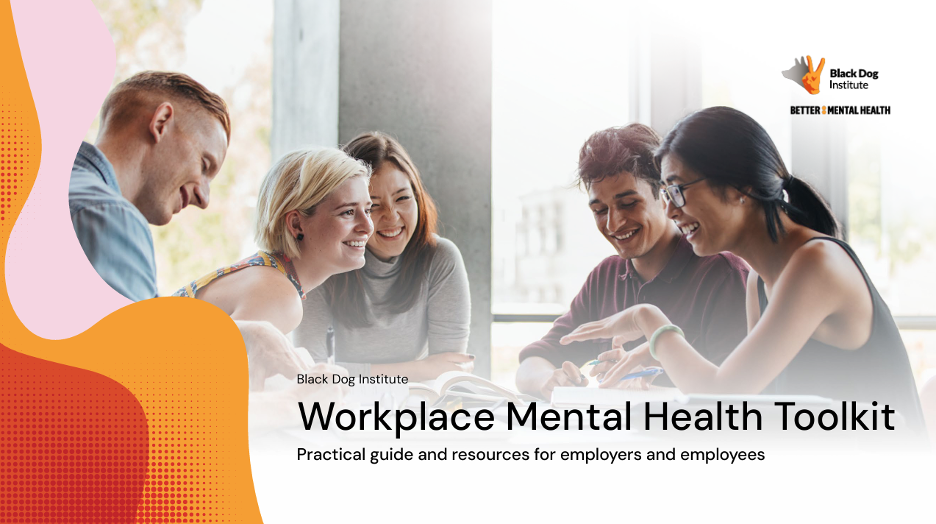
The Workplace Mental Health Toolkit, developed by the Black Dog Institute, is a comprehensive, evidence-based resource designed to help organizations build mentally healthier workplaces. It addresses one of the most pressing issues in modern work environments: the rising prevalence of mental health conditions such as stress, anxiety, and depression, and their significant impact on workplace engagement, productivity, absenteeism, and culture.
This toolkit is intended to support both employers and employees in recognizing, managing, and responding to mental health challenges in the workplace. It provides practical tools to reduce stigma, promote open conversations, and foster supportive and safe environments where individuals can thrive both personally and professionally.
At its core, the toolkit tackles three key goals:
- Protect against harm by helping organizations understand and mitigate psychosocial risks.
- Promote positive mental health through proactive culture-building and wellbeing strategies.
- Respond effectively to mental health challenges by equipping individuals and leaders with the skills, knowledge, and frameworks to take supportive, informed action.
Intended Audience
The intended audience for the toolkit includes:
- Business owners, leaders, and HR professionals looking to embed wellbeing into organizational practices.
- Managers and team leaders who want to support individuals and build resilient, psychologically safe teams.
- Employees and peers who are navigating mental health concerns and want to understand their rights, responsibilities, and avenues for support.
This toolkit is practical, grounded in scientific evidence, and accessible to organizations of all sizes and sectors. It outlines:
- Common mental health conditions and behavioral signs to look for
- Legal rights and responsibilities under Australian workplace and anti-discrimination laws
- Guidance on having safe, productive conversations around mental health
- The importance of reasonable adjustments and how to implement them
- A workplace mental health framework (Protect–Promote–Respond) across four levels: individual, job, team/operations, and system/policy
How to Use The Toolkit
- Start by building awareness, using the sections on stress, anxiety, and depression.
- Use the psychosocial risk framework and self-audit tools to evaluate your current practices.
- Share the guide with leaders and team members to create shared language and responsibility around mental health.
- Apply the Protect–Promote–Respond model to build a holistic wellbeing strategy tailored to your organizational context.
- Supplement the toolkit with other Black Dog Institute tools, such as self-care plans, mental health self-assessments, and workplace programs.
This resource can be used for organizational strategy, policy development, training, and day-to-day wellbeing conversations. It is especially valuable for organizations wanting to move beyond compliance toward creating a genuinely supportive and sustainable culture of mental health and wellbeing.
The toolkit can be downloaded for free directly from the Black Dog Institute website after providing contact information using an online form.
About the Organization
The Black Dog Institute is a globally recognized medical research institute based in Australia, dedicated to understanding, preventing, and treating mental health conditions across the lifespan. It is the only institute of its kind in Australia that combines clinical services, research, digital tools, and education. The Institute translates world-class scientific findings into real-world programs that improve lives, with key areas of focus including workplace mental health, suicide prevention, and digital mental health innovation. Their approach integrates science, compassion, and action – working in partnership with government, health systems, workplaces, and communities.
**Disclaimer**
The Recommended Resources featured on this site represent recommendations from individual initiative members. The Global Wellness Institute and the Workplace Wellbeing Initiative are not responsible for the content provided. The views expressed are solely those of the authors and do not necessarily reflect an official endorsement of the resource by the Global Wellness Institute or the Workplace Wellbeing Initiative. Readers are encouraged to contact the organization that developed the Recommended Resource for more information.
The post Black Dog Institute Provides Practical Guidance for Organizations Seeking to Address Employee Mental Health and Wellbeing appeared first on Global Wellness Institute.
]]>The post Wellbeing Is the Strategy: How Leadership and the Five Elements Create a Mental Health Ripple Effect That Transforms Culture appeared first on Global Wellness Institute.
]]>
Author: Jocelyn Pepe, MSc. MHC
Employee mental health and wellbeing are strategic imperatives that shape organizational outcomes. Across industries, declining engagement and rising health-related absences are impacting culture and productivity as many employees reach their cognitive limits. When leaders prioritize wellbeing, they move beyond supporting individuals—they drive meaningful, lasting improvements throughout the organization. This approach is not just a benefits checklist or a one-off campaign; it must be woven into leadership, culture, and everyday practices.
The impact is real and measurable. For example, a Fortune 300 leader recently shared a staggering statistic noting a 13% annual increase in year-over-year health benefit claims in an environment of change, highlighting the urgency of this issue (personal communication). As change accelerates, safeguarding employee wellbeing becomes essential. Healthier employees deliver stronger results, and a whole-person, integrated approach to wellbeing is key to organizational success.
Mental Health Is Everyone’s Business
Globally, 12 billion working days are lost annually due to poor mental health, with an economic cost of $1 trillion. This is where mental health and wellbeing become a “we” challenge to approach together, not a “them” problem. It is an epidemic that cannot be ignored. When leadership embraces that shared responsibility, it creates a ripple effect that increases morale, strengthens culture, and deepens impact.
A truly effective strategy begins with a cultural commitment to support the whole person, integrating five interconnected elements: social, physical, mental, emotional, and spiritual. When organizations actively support all five, they create psychologically safe, cognitively sharp, and emotionally resilient environments where people contribute and thrive. Let’s explore this further.
1. Social Wellbeing: Creating Cultures of Connection
Humans are inherently social beings, and healthy connections at work are essential for fostering psychological safety. When these connections are prioritized, they lay the groundwork for greater collaboration, trust, and a genuine sense of belonging—key foundations for building high-impact teams.
Leadership actions:
- Train leaders in conscious communication—active listening, genuine curiosity, and appreciation to build psychological safety.
- Acknowledge people often. A simple “thank you” can shift an entire interaction.
When employees feel seen and supported, they shift from survival to security. That shift fuels creativity, innovation, and resilience.
2. Physical Wellbeing: Supporting the Brain and Body That Power the Work
Without strong physical health, employees are unable to fully engage and excel in their roles. The ways in which individuals care for their bodies and the ways the workplace environment supports them directly influences neuroplasticity, energy levels, and mental sharpness.
Leadership actions:
- Manage energy not time; everyone’s energy cycles are unique. Constant meetings, and always on culture, zap energy needed for contribution.
- Protect recovery with vacation policies, work travel buffers, and strong boundaries on after-hours communication.
When organizations respect the brain and body, they create a workforce that is more focused, energized, and engaged.
3. Mental Wellbeing: Optimizing Cognitive Load
When cognitive load is too high, the prefrontal cortex — the part of the brain responsible for decision-making and focus — becomes depleted. Chronic stress shifts brain activity toward the amygdala, the fear center, resulting in reactivity instead of clarity.
Leadership actions:
- Design for focus: reduce unnecessary meetings & expectations of always-on chat systems.
- Define roles and keep workloads realistic when others are on a Leave of Absence. The overburden on employees who are left at work drains them double.
Balancing cognitive demands enables employees to sustain attention, adapt fluidly, and contribute at higher levels.
4. Emotional Wellbeing: Regulating the Inner World
Emotions are physiological signals, and emotionally intelligent workplaces help employees notice, regulate, and respond to these signals. Research shows emotional regulation predicts higher job satisfaction.
Leadership actions:
- Equip managers with emotional intelligence skills and leverage regular check-ins and pulse surveys to proactively identify and address emerging employee needs.
- Incorporate mindful grounding at the start of meetings to create space for presence, reduce stress, and model healthy emotional regulation for teams.
A culture of emotional regulation builds psychological safety, trust, and calmer environments.
5. Spiritual Wellbeing: Purpose as a Stress Buffer
Purpose is one of the most powerful buffers against stress. Purpose-driven work reduces allostatic load — the wear and tear of chronic stress — and improves health outcomes. By shifting attention from personal concerns to contributing to a larger cause, employees can experience greater resilience and fulfillment in their roles.
Leadership actions:
- Authentically live the organization’s mission, vision, and values.
- Train, develop, and empower employees to understand their personal values and goals, and connect them to the organization’s mission.
When employees find meaning in their work, they become more engaged, resilient, and adaptive in the face of change.
The Future is Health and The Result is Sustainable Impact
When leaders actively engage in all five elements of wellbeing for themselves and others, the effects extend well beyond individuals and fundamentally transform organizational culture. This integration drives:
- Higher engagement: if every employee were engaged and thriving, it could unlock $9.6 trillion in added productivity—a boost equal to 9% of global GDP.
- Better decision-making: regulated nervous systems keep the prefrontal cortex operating optimally.
- Sustainable contribution: lower burnout and turnover strengthen organizational culture.
The future of work is deeply human — and humans must be well for organizations to thrive. When leaders place wellbeing at the heart of their strategy, they don’t just improve health outcomes; they transform culture, elevate performance, and build organizations where both people and business flourish.
About the Author
Jocelyn Pepe is the author of Claim Your Brain, an insightful exploration of where science and soul meet in the world of mental health. As the founder of TrU, she fuses research, lived experience, and deep coaching to strengthen the mental health and wellbeing of leaders and teams elevating optimal impact and performance. Jocelyn holds a master’s degree in the psychology and neuroscience of mental health and multiple coaching designations in both health and performance. She is reshaping the future of how we care for mental health- in and beyond the workplace.
**Disclaimer**
The blog submissions featured on this site represent the research and opinions of the individual authors. The Global Wellness Institute and the Workplace Wellbeing Initiative are not responsible for the content provided. The views expressed are solely those of the authors and do not necessarily reflect the official policy or position of the Global Wellness Institute or the Workplace Wellbeing Initiative. Readers are encouraged to consult with a qualified healthcare professional for specific health concerns.
The post Wellbeing Is the Strategy: How Leadership and the Five Elements Create a Mental Health Ripple Effect That Transforms Culture appeared first on Global Wellness Institute.
]]>The post Why Employers Need a Roadmap for Employee Health and Well-Being appeared first on Global Wellness Institute.
]]>
Resource Recommendation by Jessica Grossmeier, PhD, MPH
In recent years, the importance of employee health and well-being has taken center stage in workplace discussions. Recent articles in Harvard Business Review and Forbes indicate employees are expecting more meaningful well-being support from their employers.
The rise of hybrid work, global stress levels at record highs, and increased attention to social determinants of health have left many organizations asking: How can we design well-being strategies that truly work?
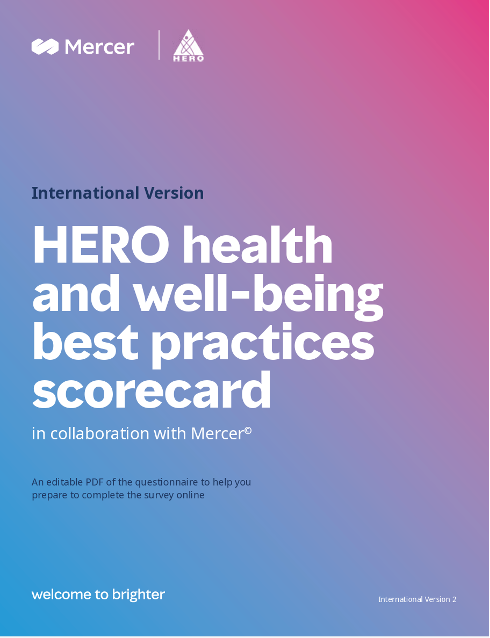
Employers need more than good intentions—they need evidence-based tools that show them where to start, how to prioritize investments, and how to measure success. That’s where the HERO HEALTH AND WELL-BEING BEST PRACTICES SCORECARD IN COLLABORATION WITH MERCER© (International HERO Scorecard) comes in.
Introducing the International HERO Scorecard
The HERO Scorecard has been guiding employers since its launch in 2006, with more than 3,000 organizations worldwide using it to evaluate and strengthen their health and well-being (HWB) strategies. Recognizing the global nature of today’s workforce, HERO now offers an International Version of the Scorecard, translated into 11 languages and tailored to organizations operating outside the United States.
This free, web-based resource provides a structured way for organizations to benchmark their current practices, identify opportunities for growth, and align investments in employee well-being with broader organizational goals. The Scorecard has been validated through research linking higher scores with stronger employee participation, healthier risk profiles, better medical cost trends, improved perceptions of employer support, and even stronger organizational financial performance.
What’s Inside the International HERO Scorecard?
The International HERO Scorecard covers the foundational elements that drive successful well-being programs, providing a comprehensive framework employers can use to strengthen their approach. The tool is divided into six core sections:
- Strategic Planning: How well is well-being embedded into the organization’s business goals?
- Organizational & Cultural Support: Does the company foster a culture that prioritizes health?
- Programs: What types of health and well-being offerings are available?
- Program Integration: How well are these programs aligned with other organizational initiatives?
- Participation Strategies: What approaches are being used to engage employees?
- Measurement & Evaluation: How is success being tracked and communicated?
In addition to these foundational areas, the HERO Scorecard also evaluates best practices across focus areas such as mental health and well-being, health equity, and social determinants of health (SDOH) —all pressing issues for today’s employers.
How to Access the International HERO Scorecard
Employers and other stakeholders can access the International HERO Scorecard for free through the HERO website. In addition to the Scorecard itself, HERO provides a range of supporting resources, including user guides, glossaries, sample reports, and progress reports that help organizations interpret and act on their results.
To get started, visit https://hero-health.org/scorecard. There, you’ll find links to the International Scorecard, user resources, and additional materials to help your organization turn insights into action.
Final Guidance
In an era when employee health and well-being are critical drivers of organizational success, tools like the International HERO Scorecard offer a roadmap for moving beyond good intentions to measurable impact. By leveraging this practical, research-backed resource, employers can make smarter investments that support healthier, more engaged, and more productive teams.
About the Developer of the Resource
The HERO Scorecard was developed by the Health Enhancement Research Organization (HERO), in collaboration with Mercer. HERO is a national nonprofit dedicated to identifying and sharing best practices in the field of workplace health and well-being (HWB). HERO was established in 1997 to conduct and share research, policy, leadership, and strategy to advance workplace HWB and provide leadership of the nation’s workforce.
**Disclaimer**
The Recommended Resources featured on this site represent recommendations from individual initiative members. The Global Wellness Institute and the Workplace Wellbeing Initiative are not responsible for the content provided. The views expressed are solely those of the authors and do not necessarily reflect an official endorsement of the resource by the Global Wellness Institute or the Workplace Wellbeing Initiative. Readers are encouraged to contact the organization that developed the Recommended Resource for more information.
The post Why Employers Need a Roadmap for Employee Health and Well-Being appeared first on Global Wellness Institute.
]]>