The post Aesthetic Health Initiative Trends for 2026 appeared first on Global Wellness Institute.
]]>2026 Trends

Aesthetic health continues to evolve as a key pillar of modern wellbeing. Simply stated, it is the art and science of understanding how the signs and symptoms of beauty impact our lives. The term “aesthetic” is defined as the philosophy of beauty, and so it makes sense that today’s definition is more of an umbrella term and continues to expand. As we review the trends in beauty and health, the focus ties in with the general population’s goals to live healthier overall, be attractive (as one may define it) and live a long life. Evidence continues to mount proving that there is no separation between health and appearance. Aesthetic health has been tied to humans since primitive times. Better teeth, clear skin, beautiful hair and a healthy body have always represented one’s ability to continue strong family lines, and to ensure longevity, which has been a constant quest of mankind. Embracing the influence of beauty on our brains and how that ties into our overall health will take us to new heights in understanding aesthetic health.
Driven by advances in science, technology and education, the leading aesthetic health trends for 2026 highlight a future shaped by innovation, evidence-based practice and increasing accessibility, as patients seek personalized solutions that deliver natural, lasting results to support long term health and preventative care.
TREND 1: The Basic Science of Neuroaesthetics Is Evolving to Ask Questions Beyond Beauty
The reward system is deeply involved in aesthetic appreciation. The ventral striatum, including the nucleus accumbens, shows increased activity for pleasing and preferred objects. This reward circuitry, which normally releases dopamine and endogenous cannabinoids and opioids for biologically significant pleasures, is activated by beautiful faces, artwork, music and even pleasing architectural spaces. However, aesthetics often goes beyond pleasure and liking, and incorporates nuanced emotions. In some instances, negative emotions can contribute to powerful aesthetic experiences, like a sense of anxiety embedded in the experience of awe. Researchers in the US and Europe are uncovering a more complex cocktail of emotions experienced in aesthetic encounters.
The rise in neurocosmetics and the mind-skin connection will bring forward compounds that interact with the skin’s receptors to positively affect emotional states and link psychological health and skincare. This will support the expanding wellness industry by furthering emotional wellbeing and stress reduction, encouraging more businesses to draw on all five senses and produce services and products that customers look forward to buy and consume.
Resources:
- Menninghaus, W., Wagner, V., Wassiliwizky, E., Schindler, I., Hanich, J., Jacobsen, T., & Koelsch, S. (2019). What are aesthetic emotions?. Psychological review, 126(2), 171.
- Fingerhut, J., & Prinz, J. J. (2020). Aesthetic emotions reconsidered. The Monist, 103(2), 223-239.
- Christensen, A. P., Cardillo, E. R., & Chatterjee, A. (2023). What kind of impacts can artwork have on viewers? Establishing a taxonomy for aesthetic impacts. British journal of psychology, 114(2), 335-351.
- Stamkou, E., Keltner, D., Corona, R., Aksoy, E., & Cowen, A. S. (2024). Emotional palette: a computational mapping of aesthetic experiences evoked by visual art. Scientific Reports, 14(1), 19932.
TREND 2: Longevity Aesthetics
Longevity aesthetics is one of the biggest shifts we will see advancing in beauty and health. Instead of trying to “reverse ageing” the focus is shifting towards optimizing biological age and long term health. More brands will begin to offer treatments that improve sleep, recovery, stress resilience and cellular repair, like NAD+ therapy and cellular repair treatments.
Traditional beauty and aesthetics treated wrinkles or sagging skin as cosmetic problems. Longevity aesthetics asks a different question: How old are your cells biologically?
Skin is increasingly viewed as a window into internal health. As a result, services in this area will combine dermatology, nutrition, hormone optimization and metabolic testing.
Future longevity aesthetics will use biological data to guide treatments. Epigenetic age testing, microbiome analysis and wearable health monitors will all be used to treat collagen breakdown, inflammation markers, oxidative stress and hydration levels. The future will be more about looking young through improved health than relying on procedures to hide ageing.
Resource:
- Longevity cosmeceuticals as the next frontier in cosmetic innovation //pmc.ncbi.nlm.nih.gov/articles/PMC12137348/
TREND 3: Psycho-Dermatology – Exploring the Brain/Body Connection and Its Effect on Our Health and Appearance
The link between our mental and physical states and their impact on our skin’s condition and our general health and wellbeing continues to gain momentum. The next chapter of wellness for aesthetic health will be the mind-body beauty connection where mental wellbeing and physical health are more intertwined. The acceleration of the mind/body connection will encourage more brands, spa operators and wellness professionals to enhance the wellness journey with neuro cosmetics, incorporating stress relieving techniques, healing practices and revised routines to accelerate this understanding. People will be willing to pay more for products with mood boosting qualities. Looking good makes people feel more confident and maintaining good mental wellbeing is key to overall wellbeing.
Our current circumstances continue to bring these ideas to light, and beauty presents an opportunity to improve and target this space with new innovations like edible and drinkable products, biometric screening in spa and wellness settings, skin immunity and wider emphasis on integrative wellbeing. Integrative medicine practitioners will be aware of the role that stress plays in disease, and we will continue to see medical and wellness approaches come together to manage stress and prevent skin conditions like acne, rosacea and premature aging.
*Did you know that the brain and skin have the same embryonic origin? Skin and brain form at the same time on day 21 of the embryo, with the outermost part of the embryo – the ectoblast – giving rise to the nervous system and the epidermis. Your skin is therefore a sort of extension of the brain. Its nerve architecture is extremely complex, with no less than 800,000 neurons, 11 meters of nerves and around 200 sensory receptors per cm3. This connection makes it impossible to dissociate the psychic realities that each of us undergoes on a daily basis from the physical ones concerning our skin.
Resource:
- *Prof. Laurent Misery, Head of the Department of Dermatology at the University Hospital of Brest, France
TREND 4: Regenerative Aesthetic Medicine
Sound science and data-backed products and services are not just hoped for by consumers, they are expected. A huge trend is regenerative treatments that repair tissues instead of temporarily filling or freezing them.
The microbiome remains an important focus, and soon we will see a new generation of regenerative biotherapeutics featuring bioactive proteins, growth factors and nucleic acids taking center stage for skin and hair rejuvenation. Exosomes can provide similar benefits to stem cell therapy without many of the unwanted side effects and polynucleotides help improve the skin tissues on a cellular level. Rather than introducing new ingredients, hi-tech performing cosmetic brands will focus on advanced delivery systems for optimum efficacy and outcomes, bringing forth new ways to innovate legacy ingredients and equipment. We will also see tissue regeneration instead of botox style correction, with an emphasis on long term structural improvements
*The field of aesthetic health, particularly in medical aesthetics, has been experiencing significant trends and advancements. There’s a growing preference for less invasive treatments that offer minimal discomfort and require little to no downtime. This trend reflects a shift towards procedures that can be done quickly, often in an outpatient setting, with rapid recovery times. This is driven by factors such as advancements in technology, growing awareness about aesthetic treatments, and an ageing population seeking anti-aging solutions.
Resource:
- *Prof Patrick Treacy Medical Director Ailesbury Clinics MICGP, MBCAM, H. Dip Dermatology, DRCOG, DCH, LRCSI, DTM MB BCh
TREND 5: Hyper-Personalized Aesthetics Using AI and Biomarkers with an integrative approach to singular issues
Technology will allow personalized treatments tailored to an individual’s biology, genetics and lifestyle using AI skin diagnosis, DNA-based skincare, predictive ageing models and real time. Skin and hair will become biomarkers of overall health, linking beauty directly to medical diagnostics.
As the concept of wellness evolves into a whole-person approach to health, 2026 will continue to see an increasing trend where specific issues are addressed through multiple modalities. Take skin health, for example. Instead of solely relying on specific skincare treatments for physical concerns, holistic approaches that incorporate aspects like diet, sleep and mental health will become a standard part of the wellness examination. Addressing aesthetics will involve an approach that encompasses the mind, body and spirit, linking the concept of improving appearance to enhancing overall wellbeing. Similarly, physical products that extend benefits to mental states will gain heightened attention. For instance, food and beverages with ingredients beneficial for digestion that also enhance mood, and cosmetics that not only improve physical appearance but also aim to boost self-confidence and nurture self-care will continue to spotlight the expansion from traditional aesthetics to encompass elevated mental states.
TREND 6: Traditional Ingredients Paired with Innovation
Consumers want innovations, but they also increasingly want the familiar effectiveness of the ingredients and practices they have come to trust over time. In 2026, we will continue to see more products and lifestyle management approaches inspired by traditional practices like Ayurveda, homeopathy, traditional Chinese medicine and Amazonian customs.
Products will blend herbal and plant medicine with modern science, offering solutions that address physical, mental and spiritual wellbeing. By blending time-honored knowledge with contemporary research and technology, brands will be able to deliver more holistic and trusted results. This trend represents the fusion of ancient wisdom and modern science, offering consumers a balanced approach to beauty, health and wellness that feels both innovative and reassuringly familiar.
Resources:
- Eating for Wellness Will Be a Lot Simpler—And More Celebratory—In 2024: https://www.wellandgood.com/wellness-minded-food-brands/
- Beauty + Wellness Category Expands Market by 45% Determines NIQ Report, Dec. 13, 2023: https://www.cosmeticsdesign.com/Article/2023/12/13/Beauty-Wellness-category-expands-market-by-45-determines-NIQ-report
- Formulation Trends Driving Feel-Good Products in Self-Care Rituals: https://beautymatter.com/articles/formulation-trends-driving-feel-good-products-in-self-care-rituals
- Cosmetics Business reveals the top 5 ‘Ancient Beauty’ trends of 2024 in new report: https://cosmeticsbusiness.com/cosmetics-business-reveals-the-top-5-ancient-beauty
- Integrative approach to lifestyle management: Implications for public health research & practice in the context of SDG-3: https://www.ncbi.nlm.nih.gov/pmc/articles/PMC10692374/
The post Aesthetic Health Initiative Trends for 2026 appeared first on Global Wellness Institute.
]]>The post When the Body Over-Reads the World: Mast Cells, Sensory Intelligence, and Emotional Skin appeared first on Global Wellness Institute.
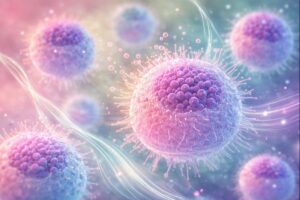
]]>
Mast cells are often introduced in medical training as the foot soldiers of classic allergy: histamine-filled, quick to degranulate, and responsible for hives, flushing, and the familiar arc of allergic reactivity. But the last decade of research has recast them into something more complex—and far more interesting.
Mast cells are increasingly understood as neuroimmune interface cells: immune cells that both respond to nearby nerves and actively signal back to them, shaping vascular tone (blood flow), pain perception, barrier function (such as skin and gut integrity), and inflammatory cascades. As such, they sit at the crossroads of immunology, neurobiology, trauma physiology, and—unexpectedly—aesthetics.
For individuals working in beauty, wellness, dermatology, integrative medicine, or minimally invasive aesthetics, mast cells matter not only because they mediate hives or sensitivity reactions, but because they reveal something about how the body interprets the world. They reflect whether the environment feels safe or threatening—through skin, through sensation, through emotion. They link the immune system to the autonomic nervous system (ANS—the branch of the nervous system that regulates heart rate, digestion, vascular tone, and stress responses) and, in many ways, to the emotional life of the skin.
Understanding this connection reshapes how we approach patients who flush, react, or “mysteriously” break out under stress. It also reframes aesthetic practice as a sensory–neuroimmune experience, not merely a cosmetic one.
Mast Cells as the Body’s Sensory Border Patrol
Mast cells sit at the body’s perimeter: the skin, the gut, the airways, the meninges (the membranes surrounding the brain), and the vasculature.
Their strategic location allows them to evaluate the world—pathogens, allergens, temperature shifts, physical pressure, and emotional arousal—and translate those inputs into rapid physiological responses.
Contemporary scholarship frames mast cells not as simple allergy cells but as environmental interpreters. They store and release:
- histamine
- tryptase
- prostaglandin D₂
- leukotrienes
- cytokines such as IL-6 and TNF-α
These mediators influence vascular tone, smooth muscle contraction, barrier integrity, itch signaling, pain pathways, and immune-cell recruitment (Castells et al., 2024; Özdemir et al., 2024).
What is striking—especially from the vantage point of aesthetics and touch-based therapies—is how readily mast cells respond to non-allergen cues.
Mechanical pressure, temperature shifts, neuropeptides (chemical messengers released by nerves), hormones, and abrupt emotional changes associated with stress physiology can all trigger mediator release.
In other words, mast cells are not responding only to allergen load; they are responding to meaning—to the body’s sense of situational safety, reflected in patterned physiological signaling associated with perceived challenge or calm.
Stress, Trauma, and the ANS–Mast Cell Loop
The last decade has clarified the close proximity—and constant communication—between mast cells and the autonomic nervous system (ANS).
Mast cells cluster around peripheral nerves and express receptors for neurotransmitters, neuropeptides, and stress hormones. Conversely, mast-cell mediators directly influence neural firing, vasodilation, pain sensitization, and the permeability of protective barriers, including the gut lining and the blood–brain barrier (Forsythe, 2019; Theoharides et al., 2024).
Stress physiology is therefore not a psychological abstraction—it has biochemical consequences. During acute or chronic stress, the hypothalamic–pituitary–adrenal (HPA) axis releases corticotropin-releasing hormone (CRH) and catecholamines (such as adrenaline), both of which can provoke mast-cell activation (Theoharides, 2024; Skaper et al., 2019).
Clinically, this helps explain why some individuals experience:
- flushing or hives in emotionally charged moments
- gastrointestinal distress during conflict or public speaking
- temperature-triggered urticaria under sympathetic dominance
- dysautonomia-like episodes accompanied by mast-cell mediator flares
The literature stops short of claiming a single unified disorder of ANS–mast-cell dysregulation, but the connection itself is unmistakable.
A 2025 AGA (American Gastroenterological Association) expert review highlights the frequent coexistence of hypermobile Ehlers–Danlos syndrome (hEDS), postural orthostatic tachycardia syndrome (POTS), and mast-cell–mediator–driven gastrointestinal symptoms, reflecting cross-talk between connective tissue, autonomic tone, and barrier immunity (AGA Institute, 2025). Kucharik & Chang’s review of the hEDS/POTS/MCAS triad points in the same direction (2020).
For aesthetic practitioners, this means that reactions seen during or after treatments may involve systems far broader than local skin response. They may reflect the patient’s baseline autonomic and neuroimmune landscape rather than a simple contact or product sensitivity.
When Two Systems Converge: A TCM Interpretation of Neuroimmune Reactivity
Traditional Chinese Medicine (TCM) offers a remarkably parallel understanding of neuroimmune sensitivity—though expressed in a different medical language.
In TCM, sudden, reactive, and emotionally inflected symptoms fall within classical patterns involving the Liver system (associated with regulation of stress and autonomic shifts), the Spleen system (linked to digestion, inflammation, and fluid metabolism), the Lung system (boundary function and immune vigilance, often described as Wei Qi), and the Kidney system (long-term regulatory reserve and stress resilience).
These systems describe networks of function rather than isolated organs, mirroring the distributed nature of mast cells throughout fascia, nerves, mucosa, vasculature – even surrounding the brain.
Many mast cell activation syndrome (MCAS)-like presentations map elegantly onto these classical frameworks: Liver-driven “Wind” reactions, Spleen-related Dampness affecting gut barrier function, Lung-mediated skin sensitivity, and Kidney-associated vulnerability to chronic stress.
This is not offered as metaphor alone. It represents two medical languages describing the same underlying phenomenon: the convergence of immune vigilance, sensory processing, and emotional regulation.
Why MCAS (Mast Cell Activation Syndrome) Belongs in a Neuroaesthetics Conversation
Neuroaesthetics explores how the brain responds to beauty, coherence, and sensory order—and how these experiences shape emotional, cognitive, and physiological states.
While this literature often uses the term beauty, here it may be more precise to speak of the salubrious: sensory inputs that regulate the nervous system and support physiological balance.
Mast-cell physiology highlights the opposite end of this spectrum: what happens when the body interprets the world as jagged, unpredictable, or threatening.
Beauty and threat exist on a continuum of sensory meaning-making:
- Salubrious inputs (soothing touch, coherent environments, gentle color and light, rhythmic or predictable sensory experience) tend to downshift autonomic arousal and reduce inflammatory signaling.
- Noxious or disorganizing inputs (abrupt pressure, sharp sensory contrast, unpredictability, emotional tension) may upshift sympathetic tone and provoke mast-cell activation in sensitive individuals.
This makes aesthetic settings—not traditionally viewed as neuroimmune environments—important spaces for sensory regulation. The sensory choreography (touch, sound, light, order etc) of a treatment room may have neurobiological consequences for people with reactive biology.
Aesthetic Practice as a Neuromodulatory Environment
This is not about diagnosing MCAS or treating immune pathology in an aesthetic setting. Rather, it is about recognizing that every aesthetic treatment is a sensory event—one that interfaces with the nervous system, the emotional brain, and the immune system in real time.
Research cited in the previous post demonstrates that acupuncture, intentional touch, facial massage, structured breathing, and coherent multisensory environments can regulate limbic activity, improve heart-rate variability (a marker of autonomic flexibility), and modulate stress circuits that affect mast cells downstream.
In parallel, mast-cell literature shows that sympathetic arousal, temperature shifts, pain anticipation, and emotional stress influence mediator release (Forsythe, 2019; Theoharides, 2024; Chan et al., 2024).
This intersection underscores a key point for aesthetic and wellness practitioners:
The body reacts not just to what we do, but to how we do it—and in what sensory and emotional context.
For patients with mast-cell sensitivity, gentleness, predictability, and sensory coherence are as therapeutic as the intervention itself.
The Future: Toward Neuroimmune Beauty
As the minimally invasive aesthetics field evolves, the conversation is shifting from procedures to physiology—from surface effects to the sensory–emotional–immune loops that shape how a person experiences their own face, skin, body, and environment.
MCAS is not primarily an aesthetics condition, nor should it be treated as one. But it offers a vivid illustration of what happens when the body over-reads the world—when signals that should be benign feel threatening, and when the skin becomes a site of neuroimmune conversation.
The future of integrative beauty—aligned with neuroaesthetics, TCM, and emerging neuroimmune science—will increasingly recognize:
- the emotional intelligence of the skin
- the sensory intelligence of mast cells
- the role of safety and coherence in treatment environments
- the power of aesthetic rituals to influence the nervous system
- the possibility that beauty, properly understood, is a form of neuromodulation
This is the landscape in which minimally invasive aesthetics will continue to grow: one where sensory meaning, emotional regulation, and immune physiology meet—and where practitioners shape not only appearance, but experience.
References
1. Castells M, Giannetti MP, Hamilton MJ, et al. Mast cell activation syndrome: Current understanding and research needs. Journal of Allergy and Clinical Immunology. 2024 Aug;154(2):255–263.
2. Dilemma of mast cell activation syndrome: Overdiagnosed or something else? Journal of Allergy and Clinical Immunology: In Practice. 2024.
3. Mast cell activation syndrome (MCAS): A primary care guide. 2025.
4. Özdemir Ö, Kasımoğlu G, Bak A, Sütlüoğlu H, Savaşan S. Mast cell activation syndrome: An up-to-date review of literature. World Journal of Clinical Pediatrics. 2024;13(2):92–113.
5. Forsythe P. Mast cells in neuroimmune interactions. Trends in Neurosciences. 2019;42(1):43–55.
6. Theoharides TC. Mast cell–sensory neuron interactions under stress. Journal of Allergy and Clinical Immunology. 2024 letter.
7. Kucharik A & Chang C. The relationship between hypermobile Ehlers–Danlos syndrome (hEDS), postural orthostatic tachycardia syndrome (POTS), and mast cell activation syndrome (MCAS). Clinical Reviews in Allergy & Immunology. 2020 Jun;58(3):273–297.
8. Theoharides K, et al. Mast cells in the autonomic nervous system and potential role in disorders with dysautonomia and neuroinflammation. Annals of Allergy, Asthma & Immunology. 2024;132(4):440–454.
9. Skaper SD, Facci L, Giusti P. Mast Cells in Stress, Pain, Blood-Brain Barrier, Neuroinflammation and Alzheimer’s Disease. Frontiers in Cellular Neuroscience. 2019;13:54.
10. AGA Institute. AGA Clinical Practice Update on GI Manifestations and Autonomic or Immune Dysfunction in Hypermobile Ehlers–Danlos Syndrome: Expert Review. Clinical Gastroenterology and Hepatology. 2025;23(8):1291–1302.
11. Wang J, Wu S, Zhang J, et al. Treatment of allergic rhinitis with acupuncture based on pathophysiological mechanisms: A narrative review. International Journal of General Medicine. 2023;16:3917–3929.
Lynnea Villanova MD is a senior integrative physician with over 30 years of clinical experience in Chinese herbal medicine, neurological scalp acupuncture, and complex chronic disease care. A former Physician Advisor to the North Carolina Acupuncture Licensing Board, she has helped shape clinical and regulatory standards in integrative medicine. Dr. Villanova has led multidisciplinary medical practices across specialties including women’s health, aesthetics, and neurorehabilitation, and has served on the faculty of New York Presbyterian and lectured at UNC School of Medicine. Her interdisciplinary research at the intersection of neuroscience and healing informs her immersive media works exploring brain plasticity and recovery, including Projection Booth, presented at the BrainMind Summit, and Forms of Fire, a theatrical collaboration supported by NYU, Mabou Mines, and the Romanian Cultural Institute.
The post When the Body Over-Reads the World: Mast Cells, Sensory Intelligence, and Emotional Skin appeared first on Global Wellness Institute.
]]>The post More Than Meets the Eye: The Important Story of Aesthetic Health appeared first on Global Wellness Institute.
]]>More Than Meets the Eye: The Important Story of Aesthetic Health
Global Wellness Institute, Aesthetic Health Initiative, 2022/23
The post More Than Meets the Eye: The Important Story of Aesthetic Health appeared first on Global Wellness Institute.
]]>The post Personal Care & Beauty – The Global Wellness Economy: Looking Beyond COVID appeared first on Global Wellness Institute.
]]>The Global Wellness Economy: Looking Beyond COVID
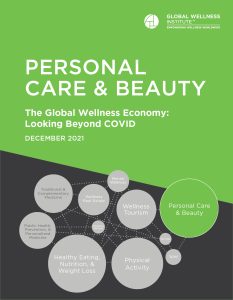
The Global Wellness Economy: Looking Beyond COVID
Released December 2021
The GWI’s most in-depth research on wellness markets ever: For the first time, it provides detailed numbers and analysis for all eleven wellness sectors: pre-pandemic, pandemic, and future growth rates; rich regional and national data; and the major trends that will impact each sector post-COVID.
WELLNESS MARKET SNAPSHOT
Personal Care & Beauty (pandemic loser, future winner): Consumer spending expanded from $1 trillion in 2017 to $1.1 trillion in 2019, and then declined by 13% to $955 billion in 2020. In 2020, Asia-Pacific moved from being the third to the first-ranked market. Spending will bounce back post-pandemic, with 8.2% annual growth through 2025, to reach $1.4 trillion.

The post Personal Care & Beauty – The Global Wellness Economy: Looking Beyond COVID appeared first on Global Wellness Institute.
]]>The post Beauty2Wellness: Mitigating Barriers and Building Bridges appeared first on Global Wellness Institute.
]]>
A new two-part study undertaken by the Global Wellness Institute and Dr. Anjan Chatterjee from the University of Pennsylvania that addresses the fundamental question: how might beauty contribute meaningfully to wellness?
The first study tests the “beauty is good–disfigured is bad” stereotypes and offers unique insight into how cosmetics could play an important role in overcoming these biases. The second study identified concepts that bridge beauty and wellness, showing that the words used by the industry may be able to bridge the perception gap.
Together, these studies provide new evidence-based insights to mitigate the barriers between beauty and wellness and build new bridges to enhance the connection between them.
Read the press release here.


$25 plus shipping and taxes
Research Abstract
Beauty animates much of our lives: we make aesthetic decisions constantly, based on how we want to appear, who we wish to spend time with, etc. But while we know something about the biology and psychological effects of facial beauty, we know virtually nothing about beauty’s relationship to wellness. This two-part research project will be the first to address how beauty can meaningfully contribute to wellness.
The first study addresses a critical issue: while good-looking people receive so many advantages in life (from better pay to being considered more intelligent), people with facial disfigurement experience just the opposite. This study analyzes the range and depth of biases against people with disfigurement to help overcome them. Because the “making up” of disfigurement has the potential to reduce innate negative responses that impede peoples’ potential to flourish.
“The link between beauty and wellness is not obvious. An unhealthy preoccupation with beauty can emphasize a “beauty is good” stereotype, where people are judged based on how they look rather than how they act,” said Dr. Chatterjee. “Our first study showed that people make deep inferences about a person’s personality based on superficial features. Flawed faces are regarded as flawed people. The cosmetic industry can mitigate these judgments that likely adversely impacts people’s well-being at work and at play.”
The second study, using natural language processing, identifies the concepts that bridge the semantic space between beauty and wellness, while also investigating related words such as “beautiful” and “well-being.” Additional analyses will identify how these bridging concepts vary by gender and by age cohorts (Millennials, Gen X, etc.). By identifying the words that embody elements of both beauty and wellness, the wellness industrycould then operationalize these concepts and create innovative ways of linking beauty to wellness by capitalizing on how people actually think.
Together, these studies provide new evidence-based insights that can mitigate barriers between beauty and wellness and build new bridges that can enhance the connection between them.
*In addition to conducting our own in-house research, the Global Wellness Institute supports and partners with organizations and thought leaders who conduct research on a variety of wellness topics. While these research and findings may not represent the views of the Global Wellness Institute, we are committed to sharing different viewpoints and global research that stimulate thoughtful and rigorous discussions to help empower wellness worldwide.
The post Beauty2Wellness: Mitigating Barriers and Building Bridges appeared first on Global Wellness Institute.
]]>