The post From Wellness Programs to Workplace Transformation: How Leading Organizations Are Rethinking Workforce Wellbeing appeared first on Global Wellness Institute.
]]>
By Jessica Grossmeier, PhD, MPH
For those who lead wellbeing initiatives in their organizations, a familiar frustration often emerges: launching programs employees genuinely want, measuring participation, tracking engagement, yet still wondering why the needle barely moves on burnout and stress. This challenge is widespread. According to McLean & Company’s 2025 research, only 43% of employees say their company’s wellbeing programs effectively meet their needs. Burnout affects 83% of workers, and employee engagement dropped from 88% to 64% in just one year (DHR Global, 2026).
The gap isn’t about effort or quality. Organizations invest heavily in meditation apps, gym memberships, resilience training, and mental health resources. These programs provide real value to individual employees, but they can’t fully counteract a work environment that generates stress faster than any program can address it.
Why Individual Programs Reach Their Limits
Individual wellness programs provide important support, but they operate within constraints when workplace conditions themselves create strain. Think about the logic: programs help employees build resilience and coping skills, which matters. Yet those same employees return to environments where the sources of stress remain unchanged.
Consider a common scenario: an organization offers stress-management workshops while teams operate while understaffed. Employees attend the workshop, learn valuable breathing techniques and mindfulness practices, then return to 60-hour weeks with compressed deadlines. Even with the best intentions, the implicit message can become problematic: wellbeing is something individuals manage on their own, not something organizations address together through how they structure work.
The World Health Organization’s 2022 guidelines on mental health at work recommend that organizations implement interventions targeting working conditions alongside individual support, rather than relying primarily on individual resilience. This dual approach recognizes that both elements contribute to workforce wellbeing, and both deserve attention and resources.
Building on Individual Programs with Systemic Support
The good news is that individual programs need not be abandoned or declared ineffective. Rather, the opportunity lies in enhancing their impact by also addressing how work gets designed and managed. This means examining job design, workload distribution, leadership practices, decision-making autonomy, and team dynamics alongside the individual resources organizations already provide.
A meta-review of more than 50 systematic reviews (covering 957 studies in total) found that organizational interventions improve employee well-being more reliably than individual programs alone. The strongest results came from changes to work schedules and job design. More importantly, combining organizational changes with individual support created longer-lasting improvements than either approach in isolation.
The Work Wellbeing Playbook, developed by the World Wellbeing Movement in collaboration with the University of Oxford Wellbeing Research Centre and Indeed, synthesized 3,000+ academic studies to identify six core drivers of workplace wellbeing: development and security, workplace relationships, independence and flexibility, variety and fulfillment, earnings and benefits, and risk/health/safety. These drivers don’t operate independently. A flexible schedule matters less if the workload is crushing. Fair pay helps, but not if the work feels meaningless. Effective wellbeing strategies address multiple drivers simultaneously, recognizing how they interact within specific workplace contexts.
What This Looks Like in Practice
Some organizations are moving beyond piecemeal wellness programs to build wellbeing into how they operate. Their approaches vary based on industry, size, and culture, but share common elements worth examining.
Making Leadership Accountable
Novo Nordisk measures psychosocial risk through regular surveys tracking influence, recognition, meaningfulness, social support, predictability, and balanced demands. In 2024, they set measurable targets for executives to reduce stress levels by 10% year-over-year across their business units. This creates accountability that goes beyond telling managers to “support wellbeing” without defining what that means or tracking results.
Using Data to Find Problems
Banca Transilvania tracks 15 work-related factors through their Employee Engagement Index, including work-life balance, workload stress, process efficiency, and resource availability. Results get shared at team, department, and director levels. Managers review findings with their teams and identify specific improvements. This approach works because it surfaces real issues (insufficient staffing to handle current demand) rather than generic concerns (need for better wellness benefits).
Redesigning Work, Not Just Offering Flexibility
Research shows that work design changes, including workload redistribution, flexible schedules, and autonomy, drive well-being more than perks alone. Organizations like Microsoft and Salesforce treat flexible work as essential to performance, not a perk. Employees get autonomy to manage schedules and locations in ways that let them meet performance goals without sacrificing wellbeing. Microsoft’s Viva Insights platform supports focused work time, meeting-free days, and boundaries around communication. The distinction matters: flexibility means employees can work from home, but redesign means the work itself is structured so they’re not checking email at 10pm regardless of location.
Building Connection Into Work
Leading organizations recognize that workplace relationships are a key driver of wellbeing and performance. They build opportunities for community and connection into work processes and create expectations for conduct that fosters respect, fairness, and collaboration. For example, Accenture has designed office spaces that balance privacy, collaboration, social time, and meetings. But physical space is only part of their approach. Policies cover inclusive dress codes, respectful conduct, community involvement, flexible arrangements, and spaces supporting diverse needs (wellness rooms, interfaith rooms, lactation rooms, all-gender restrooms). The goal isn’t just allowing connection but creating conditions where it naturally develops.
Linking Wellbeing to Business Outcomes
Organizations getting this right measure wellbeing outcomes and connect them to business results. They use employee surveys, pulse checks, engagement scores, and focus groups to track satisfaction, engagement, burnout, work-life balance, and overall wellbeing. Then they link these to employee performance, productivity, financial results, and company reputation.
This creates a business case that resonates with executives who need proof that wellbeing investments deliver returns. Recognition programs like Fortune 100 Great Place to Work, the Health Project’s C. Everett Koop National Health Award, and the Global Healthy Workplace Award identify organizations taking systemic approaches rather than just offering good benefits packages.
The Real Challenges of Implementation
The case examples above are inspiring, but they don’t reveal the journey and commitment required. Most organizations featured in wellbeing articles spent years building these systems. They navigated budget constraints, secured executive buy-in, tested solutions through pilot programs, and addressed employee skepticism stemming from previous wellness initiatives that promised more than they delivered.
Wellbeing leaders face similar challenges that deserve direct acknowledgment. Small organizations can’t simply replicate a Fortune 100 organization’s approach without thoughtful adaptation. A 50-person company doesn’t need executive stress-reduction targets by business unit, as it likely operates as a single unit. But the underlying principle still applies: assign accountability for specific wellbeing outcomes and measure progress.
The organizational dynamics can be complex. Redesigning jobs requires collaboration with managers who built successful careers in current systems and may have valid concerns about change. Flexible work policies sometimes face resistance from leaders who associate physical presence with productivity, often based on their own experience. Measuring psychosocial risk can surface issues that require budget allocation, which becomes difficult when wellbeing isn’t yet connected to measurable business outcomes in an organization’s strategic planning.
A Practical Starting Point
Wellbeing leaders can begin expanding their approach while maintaining the individual programs their employees value. Consider starting with one work condition that creates measurable strain. This might be meeting overload, unclear priorities, or chronic understaffing. Choose something specific that data can confirm and that leaders in the organization have the influence to address. Design a pilot that changes this condition rather than only offering resources to cope with it. Measure both wellbeing outcomes and business metrics that matter to the leadership team. Use what emerges to build the case for broader systemic changes.
Organizations making meaningful progress on workforce wellbeing share an important characteristic: they’ve broadened their view of wellbeing from an HR program to a business strategy. This shift requires patience, collaborative relationships across the organization, and willingness to surface and address difficult truths about working conditions. The journey takes time, but it creates lasting improvements rather than temporary engagement that fades when underlying conditions remain unchanged.
Individual wellbeing programs become significantly more effective when they support employees who work in sustainable, well-designed environments. The combination of individual resources and systemic improvements creates conditions where people can genuinely thrive. That’s the difference worth pursuing.
About the Author
Jessica Grossmeier is an award-winning researcher, speaker, and author of two books: Reimagining Workplace Well-being and Well At Work. As a leading authority in workforce well-being, she collaborates with employers and well-being service providers to create evidence-based strategies to support individual and organizational thriving. Recognized as one of the most influential women leaders in health promotion by the American Journal of Health Promotion, Jessica serves as a Senior Fellow for the Health Enhancement Research Organization, Strategic Advisor-ROI of Care for Compassion 2.0, Chairs the Workplace Wellbeing Initiative of the Global Wellness Institute, and serves on several advisory boards. For more information: www.jessicagrossmeier.com
**Disclaimer**
The blog submissions featured on this site represent the research and opinions of the individual authors. The Global Wellness Institute and the Workplace Wellbeing Initiative are not responsible for the content provided. The views expressed are solely those of the authors and do not necessarily reflect the official policy or position of the Global Wellness Institute or the Workplace Wellbeing Initiative. Readers are encouraged to consult with a qualified healthcare professional for specific health concerns.
The post From Wellness Programs to Workplace Transformation: How Leading Organizations Are Rethinking Workforce Wellbeing appeared first on Global Wellness Institute.
]]>The post Social Prescribing to Promote Mental Wellbeing appeared first on Global Wellness Institute.
]]>
Social Prescribing to Promote Mental Wellbeing
By Tonia Callender, GWI research fellow
Pay for a medical prescription or take an art class? Instead of using traditional medications, health service providers in over 30 countries are prescribing community engagement and recreational activities to alleviate various health symptoms and promote mental wellness..1
Originating in the United Kingdom in the 1980s, and now utilized in dozens of countries (including Portugal, Sweden, Korea, Australia and China), social prescribing helps people facing loneliness, depression and health issues by connecting patients to diverse activities, resources and services within their community..2
How does it work? Health professionals provide prescriptions or referrals for activities offered by the public sector, nonprofits or community organizations..3 Activities could include volunteering, time in nature, group mindful movement, fitness center classes, arts activities, museum visits or walking groups. Some social prescription programs help people recover from a specific medical issue, while others focus more on prevention and mental health promotion.
In some nations, social prescribing programs target specific populations or social and mental wellbeing issues. In Japan, China and South Korea, for example, social prescription programs target older adult populations, connecting them to group hobbies and activities such as gardening, music and crafts. In the United Kingdom, the Arts on Prescription program—a partnership among community arts organizations, volunteers and physicians—connects people to local arts activities and events.
While scarce statistical evidence exists on the benefits and cost effectiveness of social prescribing, an increasing number of nations report positive trends, and others are exploring social prescribing as a way to increase community connection and social support..4 For social prescribing programs to be effective, the health sector must collaborate with a host of organizations, including local governments, social workers, insurance companies, volunteer groups, local nonprofits and even businesses. Some governments have incorporated social prescriptions into existing national health programs. For example, China’s social prescription program, which began with 40 grassroots organizations, is now under the umbrella of the Healthy China Action Plan.
For further information about the benefits of social prescribing, see GWI’s Wellness Policy Toolkit: Mental Wellness.
1 Chatterjee, R. (2025). With social prescribing, hanging out, movement and arts are doctor’s order. Morning Edition. National Public Radio. https://www.npr.org/2025/07/14/nx-s1-5434386/social-prescription-arts-exercise-loneliness
2 Bickerdike, L., et al (2017). Social prescribing: Less rhetoric and more reality. A systematic review of the evidence. BMJ Open, 7(4), e013384. https://doi.org/10.1136/bmjopen-2016-013384.
3 Morse, D.F., et. al (2022). Global developments in social prescribing. BMJ Global Health, 7(5), e008524. https://gh.bmj.com/content/7/5/e008524.
4 Khan, H., Giurca, B., et al (2023). Social Prescribing Around the World. London: National Academy for Social Prescribing. https://socialprescribingacademy.org.uk/media/4lbdy5ip/social-prescribing-around-the-world.pdf.
The post Social Prescribing to Promote Mental Wellbeing appeared first on Global Wellness Institute.
]]>The post The Workplace Wellbeing Foundations Most Organizations Overlook appeared first on Global Wellness Institute.
]]>
Author: Caitlin Guilfoyle, MBA
Over the last few years, workplace wellbeing has become more of an organizational focus, representing an evolution from the days when workplace health was primarily about physical safety and injury prevention. While workplace wellness trends come and go, and some organizations promote wellbeing as a perk or part of an employee value proposition, it remains more foundational than that.
Workplace wellbeing should form a core part of every organization’s approach to how work is designed and experienced. Yet too often, wellbeing gets reduced to programs and quick fixes that sit outside the actual work itself. A mindfulness app here; a yoga class there; a wellness week that briefly interrupts the relentless pace—only for everything to snap back the following Monday.
The challenge is that these surface-level interventions rarely address what research consistently demonstrates matters most: the structural elements of work itself. Wellbeing initiatives that fail to address job design, workload, or leadership styles often fail to deliver meaningful impact. When organizations focus only on helping individual employees cope better with difficult conditions rather than addressing those conditions, it can send an unintended message that the problem lies with a lack of individual resilience rather than a challenging work environment.
The most effective workplace wellbeing initiatives address foundational elements, including the structural, deeply human aspects of work that determine whether the act of doing the work supports people or depletes them.
Start with What It Means to Be Human
At the core, humans have two fundamental categories of needs that shape wellbeing: security and growth. Security needs form the foundation – the conditions that allow people to feel safe, stable, and able to function. Growth needs represent what allows people to move forward, develop, and thrive. Both are essential. And both are deeply relevant to how work is designed and experienced.
Security Needs in the Workplace
- Safety – Do people feel psychologically safe? Can they speak up, ask questions, admit mistakes, or do they spend energy managing perception and watching their backs?
- Connection – Do people feel like they belong? Are they part of something, or just tolerated? Is there genuine care and respect in how people relate to one another?
- Self-esteem – Do people feel competent and valued? Is their contribution recognized? Do they have what they need to do their work well?
Growth Needs in the Workplace
- Autonomy – Do people have a say in how work gets done? Can they contribute ideas and have genuine influence over their choices and methods?
- Mastery – Can people learn, develop skills, and see themselves progressing? Is there room to grow?
- Purpose – Does the work feel meaningful? Do people understand how their contribution connects to something larger?
When security needs are not met, people are in survival mode. They are managing anxiety, navigating uncertainty, protecting themselves. Growth becomes impossible, not because people do not want it, but because they are too busy staying afloat. And when growth needs are absent? People might survive, but they will not move. They will not innovate. They will not bring their best thinking. They will do what is required and save their energy for elsewhere.
The Foundations that Actually Matter
This is where the real work of workplace wellbeing lives: not in the programs organizations add, but in the structures they build or fail to build. Wellbeing does not come from interventions layered on top of work. It comes from how work is designed, how people are led, and what the daily experience of being in the organization actually feels like.
Job design and workload management are fundamental for wellbeing. These are the conditions that meet fundamental human needs for competence, control, and safety:
- workloads that are sustainable and realistic
- people have clarity about expectations
- genuine autonomy in how work gets done
Psychological safety is the bedrock of security. When people can speak openly, challenge ideas without fear, and admit mistakes without retribution, they stop spending cognitive and emotional energy on self-protection. That energy becomes available for actual work.
Clear communication about roles, responsibilities, and expectations reduces the chronic low-level anxiety that comes from uncertainty. When people know what is expected, how they are doing, and how their work contributes, it meets needs for both competence and purpose.
Recognition and appreciation are signals that a person’s contribution is seen and valued, core to self-esteem and belonging.
Flexibility is fundamentally about respecting that people have lives, bodies, and circumstances that do not fit neatly into rigid structures. When organizations build in flexibility, they signal trust and support people’s need for autonomy.
Inclusive cultures where people genuinely feel they belong, where diverse perspectives are valued, where respect is not conditional are not initiatives. They are the relational foundation that determines whether people feel safe and connected at work.
The Shift That’s Required
The organizations that take wellbeing seriously ask different questions:
- Are we designing work in a way that allows people to meet their basic human needs?
- What does it feel like to work in this organization day to day?
- Are we creating conditions where people can both feel secure and have room to grow?
They treat wellbeing as a key performance indicator, not a side project. They embed it into how work is designed, not as an afterthought. They recognize that wellbeing is integrated throughout the employee experience, requiring ongoing attention and development. Crucially, they recognize that everyone contributes to a culture that drives wellbeing.
This is not glamorous work. It does not photograph well or make for impressive launch events. It is the foundational work of fixing broken processes, training leaders to effectively lead, addressing workload issues before people burn out, building psychological safety into team norms, creating transparency in communication, and ensuring people have genuine autonomy and opportunities to develop.
This foundational work matters more than any program or initiative because workplace wellbeing is not about what organizations add to work. It is about whether the work itself, the daily experience of being in the organization, supports or undermines people’s most fundamental human needs.
The Bottom Line
Wellbeing programs alone cannot address fundamental workplace issues. Yoga classes cannot solve workload problems. Mindfulness apps cannot create psychological safety. Perks cannot build wellbeing when the foundations are broken.
Workplace wellbeing that makes a real difference starts with the foundations: job design, workload management, psychological safety, clear expectations, autonomy, purpose, genuine support, and capable leadership. It starts with how work feels, with the daily experience of being in the organization, and with building the conditions that allow people not just to survive, but to thrive.
Supporting References
Black Dog Institute. Workplace wellbeing: The top ten factors involved with workplace mental health.
De Angelis M, et al. H-WORK Project: Multilevel interventions to promote mental health in SMEs and public workplaces.
Deady M, et al. A mentally healthy framework to guide employers and policy makers.
Harvey SB et al. Developing a mentally healthy workplace: A review of the literature.
Sorensen G et al. The future of research on work, safety, health and wellbeing: A guiding conceptual framework.
Umer R. What’s psychological safety at work? Guide for leaders & teams.
About the Author
Caitlin Guilfoyle is a modern work leader, coach, and workplace strategist who helps organizations design thriving, human-centered cultures that prioritize wellbeing, clarity, and sustainable performance. With an MBA (Strategic Human Resources) and nearly 20 years of experience across sectors, including as a former Future of Work Leader at PwC Australia, she brings deep expertise in leadership, modern work practices, and organizational growth. Caitlin is a certified coach and speaker, known for her calm, strategic approach to transforming the way we work. She is a member of the Global Wellness Institute’s Workplace Wellbeing Initiative.
**Disclaimer**
The blog submissions featured on this site represent the research and opinions of the individual authors. The Global Wellness Institute and the Workplace Wellbeing Initiative are not responsible for the content provided. The views expressed are solely those of the authors and do not necessarily reflect the official policy or position of the Global Wellness Institute or the Workplace Wellbeing Initiative. Readers are encouraged to consult with a qualified healthcare professional for specific health concerns.
The post The Workplace Wellbeing Foundations Most Organizations Overlook appeared first on Global Wellness Institute.
]]>The post Timeless Beauty: What Traditional Chinese Medicine Tells Us About Aging, Emotion and the Face appeared first on Global Wellness Institute.
]]>
For centuries, Traditional Chinese Medicine (TCM) has seen beauty not just as something visual, but as a reflection of your overall health, emotional balance, and inner vitality. Where many modern treatments target aging as a skin-deep issue—through injections, lasers or topical products—TCM views aging as a gradual change in the body’s energy systems, its vital essence (called jing), and in the shen, the spirit or emotional presence visible in your eyes and expression.
What if your face isn’t just something to treat, but a kind of map? What if it’s a sensitive interface between body, brain, and emotional life—showing us how we’re adapting over time?
As modern science begins to explore the brain-skin connection and how emotion is processed through the body, it becomes possible to rediscover ancient practices not just as rituals of beauty, but as tools for emotional regulation and nervous system care. We’ll explore how these systems intersect—and how integrating them might change the way we think about aging and beauty.
The Face as a Map: Ancient Wisdom
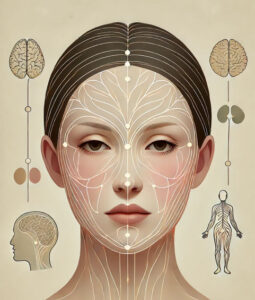
In Traditional Chinese Medicine, each part of the face is believed to be linked to an internal organ and its related emotional state. For example:
- The forehead reflects the Heart system, which governs mental clarity and presence
- The cheeks connect to the Lungs and the emotion of grief
- The chin relates to the Kidneys, willpower and fear
This is not metaphor. It’s a clinical tool in TCM diagnosis. Healers examine tone, puffiness, tension and lines as signs of how internal systems are functioning. A sagging jawline, for example, might suggest low Kidney energy; a deeply furrowed brow might reflect unresolved anger or stress affecting the Liver system.
Lillian Bridges, a leading interpreter of this wisdom, emphasized that these facial signs often appear long before symptoms show up elsewhere in the body. Importantly, this system doesn’t see aging as a flaw to fix. It reads the face as a living journal of your health history—revealing where your energy has flowed or stagnated over time.
Psychodermatology: Bridging Skin and Emotion
Modern dermatology is catching up to what TCM has long practiced: the skin and mind are deeply connected. The field of psychodermatology looks at how emotions like stress and trauma can trigger or worsen skin conditions such as eczema, acne, and psoriasis.
The reason lies in our shared biology. The skin and brain develop from the same tissue in the womb, and they stay connected through hormone systems, immune cells, and nerve pathways. The hypothalamic-pituitary-adrenal (HPA) axis, which manages your body’s stress response, can influence everything from inflammation to collagen production.
Too much stress increases cortisol, a hormone that weakens the skin’s barrier and speeds up visible aging. At the same time, inflammation in the skin can send distress signals back to the brain, reinforcing emotional symptoms. This creates a feedback loop between emotional and skin health.
Fortunately, the reverse is also true. Psychological support and stress reduction have been shown to improve skin conditions. And when people feel better about their skin, their mood often improves too.
Subcellular and Sensory Pathways in the Brain–Skin Axis
Emerging science on the skin-brain connection is showing just how deeply the body’s outer layer communicates with the nervous system. Skin cells called melanocytes—best known for producing pigment—also help regulate our internal clocks and influence immune and hormonal signaling. This means the skin is more than a barrier or cosmetic surface; it’s an active player in emotional and physiological balance.
When we apply touch, temperature changes, or movement to the skin—through massage, gua sha, or even a cool compress—we stimulate sensory nerves that send signals to the brain. These pathways influence how we feel, how we bond with others, and how our body manages stress. Some researchers are now exploring how these effects overlap with trauma-informed bodywork, suggesting that aesthetic practices may also play a role in emotional reset and nervous system healing.
Neurocosmesis: How Skincare Might Shift Mood and Stress
There’s a growing field related to neurocosmetics that explores how skincare might influence more than just appearance—it may also affect how we feel. The idea is simple but powerful: our skin is full of nerve endings and chemical messengers that talk to the brain. What we apply to the skin—through temperature, touch, or active ingredients—can send signals that help regulate mood, stress, and even hormone balance.
Some creams, for example, include natural compounds that mimic endorphins, your body’s feel-good chemicals. These products don’t just soften the skin—they may subtly lift emotional tone, especially when applied with calming touch or as part of a self-care ritual.
This might sound new, but it resonates with long-standing practices in Traditional Chinese Medicine. Gua sha, facial massage, and herbal compresses have long been used to soothe emotions, improve circulation, and regulate internal rhythms. Modern research is beginning to show how these rituals may activate nerve pathways that help calm the body’s stress response—just like some trauma-informed therapies aim to do today.
Even the skin’s microbiome and natural daily rhythms (what TCM might describe in terms of wei qi and seasonal flow) are now being studied for their role in emotional health. And herbs common in TCM—like ginseng or licorice root—are being looked at for their calming and balancing effects when applied topically.
In this light, skincare becomes more than cosmetic. It becomes a way of connecting with your own nervous system—a form of beauty that’s also about balance, sensation, and well-being.
TCM Interventions and Emotional Regulation
Traditional Chinese Medicine doesn’t aim to cover up skin symptoms—it aims to rebalance the systems beneath them. Acupuncture is a core technique. Points like Yin Tang (between the eyebrows) and Shen Men (in the ear) are traditionally used to calm the mind, ease anxiety, and improve sleep. Modern research now shows these points can affect measurable markers such as heart rate variability, cortisol levels, and activity in brain regions related to emotion.
Facial acupuncture, often dismissed as a vanity treatment, actually stimulates facial nerves and blood flow in ways that also influence mood. Some points link to branches of the trigeminal nerve, which connects to brain regions involved in emotional processing.
Herbal medicine also plays a key role. Calming herbs like Suan Zao Ren (Ziziphus), He Huan Pi (Albizia), and Bai Zi Ren (Biota) are used in formulas to support sleep, ease worry, and nourish the spirit.
One of TCM’s core insights is that the face can’t be treated in isolation. As Dr. Ping Zhang teaches, facial rejuvenation depends on the health of the whole body: digestive function, blood flow, emotional stability, and hormonal balance. When those improve, beauty emerges naturally.
Neuroplasticity in Aesthetic Wellness
Modern neuroscience is uncovering how the brain changes in response to sensory experience—a property known as neuroplasticity. Emotional regulation, once thought to be a fixed trait, is now understood as something trainable over time.
This raises a question: Can aesthetic treatments influence this plasticity? While we don’t yet know if facial procedures directly reshape the brain, there is growing evidence that they can affect emotional tone and how people perceive themselves.
Take facial expression: The “facial feedback hypothesis” suggests that expressions don’t just reflect mood—they help shape it. Studies show that people who receive Botox in the frown muscles often have reduced amygdala activity (the brain’s fear center) when shown negative images. This doesn’t mean Botox is therapy, but it suggests the brain responds to changes in expression in real time.
Similarly, practices like facial massage, gua sha, and jade rolling stimulate sensory nerves that influence the vagus nerve (a major pathway for regulating stress and emotion), the hypothalamus (which controls hormones), and limbic system (which processes emotions). These are the same pathways used in trauma-informed somatic therapy.
When practiced regularly and with intention, these treatments may help recalibrate emotional circuits, especially in people whose nervous systems are stuck in patterns of stress.
Where Ancient and Modern Meet
TCM’s concept of shen (spirit) finds parallels in modern ideas about consciousness, emotion regulation, and what scientists call the “social brain.” These aren’t rival frameworks—they are different languages describing similar ideas.
Both traditions recognize that how we look and how we feel are linked in deep ways. And both suggest that caring for the face can be part of caring for the self—not in a superficial way, but in a way that helps us feel more balanced, expressive, and at ease.
Emerging research hints at a broader model: one where beauty is understood as part of adaptation and resilience, not just something to be preserved or restored. A face that ages gracefully may be one that reflects emotional maturity, nervous system flexibility, and a sense of integration.
Call to Action
It’s time to move beyond the binary that beauty is either something frivolous or something to medically correct. In its highest form, beauty care is about revealing who we are becoming. When we treat the face as an expressive, emotional, and sensory interface—not just a surface to be fixed—we open the door to deeper well-being.
Aesthetic health can be a vital sign of emotional health. When beauty practices are informed by both ancient wisdom and modern science, they become more than cosmetic. They become healing.
Let beauty be not a mask, but a method—not a correction, but a care practice. The wisdom is ancient. The science is catching up.
References:
- Haykal D, Berardesca E, Kabashima K, Dréno B. Beyond beauty: Neurocosmetics, the Skin–Brain Axis, And The Future Of Emotionally Intelligent Skincare. Clinics in Dermatology. 2025; Available May 2025. https://www.sciencedirect.com/science/article/pii/S0738081X25001427?ref=pdf_download&fr=RR-2&rr=94dc4026583c4338
- Dirk Roosterman, Tobias Goerge, Stefan W. Schneider, Nigel W. Bunnett, and Martin Steinhoff. Neuronal Control of Skin Function: the Skin as a Neuroimmunoendocrine Organ. Physiol Rev. 2006;86(4):1309-1379. https://journals.physiology.org/doi/full/10.1152/physrev.00026.2005?rfr_dat=cr_pub++0pubmed&url_ver=Z39.88-2003&rfr_id=ori:rid:crossref.org
- Siyi Yu, Vitaly Napadow, Ted J. Kaptchuk et al. Acupuncture Treatment Modulates the Connectivity of Key Regions of the Descending Pain Modulation and Reward Systems in Patients with Chronic Low Back Pain. J. Clin. Med. 2020, 9(6), 1719; https://doi.org/10.3390/jcm9061719
- Sun JZ, Ma YL, Lin ZG, et al. The Impact Of Acupuncture On Neuroplasticity After Ischemic Stroke: A Literature Review And Future Directions. Front. Cell. Neurosci. 2022; 16. https://pmc.ncbi.nlm.nih.gov/articles/PMC9685811/pdf/fncel-16-817732.pdf https://www.frontiersin.org/journals/cellular-neuroscience/articles/10.3389/fncel.2022.817732/full
- Finzi E, Rosenthal NE. Treatment Of Depression With Onabotulinumtoxina: A Randomized, Double-Blind, Placebo Controlled Trial. J Psychiatr Res. 2014;52:1-6. https://pubmed.ncbi.nlm.nih.gov/24345483/
- Hennenlotter A, Dresel C, Castrop F, et al. The Link Between Facial Feedback And Neural Activity Within Central Circuitries Of Emotion–New Insights From Botulinum Toxin-Induced Denervation Of Frown Muscles. Cereb Cortex. 2009;19(3):537-542. https://pubmed.ncbi.nlm.nih.gov/18562330/
- Chatterjee A. Neuroaesthetics: a coming of age story. J Cogn Neurosci. 2011;23(1):53–62. https://direct.mit.edu/jocn/article/23/1/53/4981/Neuroaesthetics-A-Coming-of-Age-Story
- Chatterjee A, Vartanian O. Neuroaesthetics. Trends Cogn Sci. 2014;18(7):370–375. https://pubmed.ncbi.nlm.nih.gov/24768244/
- Chatterjee A. The Aesthetic Brain: How We Evolved to Desire Beauty and Enjoy Art. Oxford University Press; 2015.
- Duarte M, et al. Exploring the interplay between stress mediators and skin microbiota in shaping age-related hallmarks: A review . Mechanisms of Ageing and Development. https://doi.org/10.1016/j.mad.2024.111956
- Bridges LP. Face Reading in Chinese Medicine. 2nd ed. Churchill Livingstone; 2012.
- Zhang P. A Comprehensive Handbook for Traditional Chinese Medicine Facial Rejuvenation. Nefeli Press; 2006.
Lynnea Villanova MD is a senior integrative physician with over 30 years of clinical experience in Chinese herbal medicine, neurological scalp acupuncture, and complex chronic disease care. A former Physician Advisor to the North Carolina Acupuncture Licensing Board, she has helped shape clinical and regulatory standards in integrative medicine. Dr. Villanova has led multidisciplinary medical practices across specialties including women’s health, aesthetics, and neurorehabilitation, and has served on the faculty of New York Presbyterian and lectured at UNC School of Medicine. Her interdisciplinary research at the intersection of neuroscience and healing informs her immersive media works exploring brain plasticity and recovery, including Projection Booth, presented at the BrainMind Summit, and Forms of Fire, a theatrical collaboration supported by NYU, Mabou Mines, and the Romanian Cultural Institute.
The post Timeless Beauty: What Traditional Chinese Medicine Tells Us About Aging, Emotion and the Face appeared first on Global Wellness Institute.
]]>The post 2025 Wellness Real Estate & Communities Symposium Speakers appeared first on Global Wellness Institute.
]]>Wellness Real Estate & Communities
2025 Speakers
From top developers expanding the boundaries of real estate to legendary architects to innovators of new standards and technologies, the speakers at the 2025 Wellness Real Estate & Communities Symposium represent the top minds shaping the future of this exploding sector. Join us for this unique opportunity to learn from and network with the top executives, developers, designers, policymakers, consultants and visionaries leveraging wellness to increase value in real estate.

Nerio Alessandri
Founder, President, Technogym, Italy
In 1983, at just 22 years old, Nerio Alessandri founded Technogym in his home garage by combining his passion for innovation (TECHNO) and that for sport (GYM). In the early 1990s Alessandri coined the concept of Wellness, a lifestyle that aims to improve the quality of life thanks to regular physical activity, a healthy diet and a positive mental attitude. Today Technogym is a world-leading brand in products and digital technologies for fitness, sport and health and is present in 100 thousand wellness centers and 500 thousand private homes in over 120 countries. Technogym has been the Official Supplier of the Olympic Games for over 20 years. In addition to Technogym, Nerio Alessandri also created the Wellness Foundation, a non-profit organization aimed at promoting wellness as a social opportunity for all stakeholders: Governments, Businesses and Citizens.

Lynette Brubaker
Founder & CEO, LHB Group, United States
After 15+ years in the media industry as the publisher of both WWD and In Style Magazine, Lynette Harrison-Brubaker launched her boutique marketing and communications company LHB Group in 2018. The company has attracted a diverse portfolio of brands and executives who have enlisted Lynette to successfully launch or pivot in a rapidly changing business environment. Clients include makeup mogul Bobbi Brown and her brand, Jones Road; retail legend Mickey Drexler; and Michelin Star chef Missy Robbins.

Susie Ellis
Chair & CEO, Global Wellness Summit & Global Wellness Institute, United States
Susie Ellis is the founder, chair and CEO of the Global Wellness Summit and chairman and CEO of the Global Wellness Institute, the nonprofit research and educational resource for the global wellness industry. Recognized as an authority on wellness trends, Susie is frequently quoted in major news outlets around the world. She holds an MBA from the University of California, Los Angeles, and is a popular speaker at industry events.

Jonathan Emery
CEO, Aldar Development, United Arab Emirates
Jonathan Emery is CEO of Aldar Development, leading projects across the UAE, Egypt, and the UK. With over 30 years in global real estate, he’s held senior roles at Lendlease, Hammerson Plc, and Majid Al Futtaim. Known for driving digital innovation and wellness-focused design, he advises proptech startups and sits on boards including London Square and Sodic. A graduate of Nottingham Trent, with executive training from Harvard, INSEAD, and Henley, he’s also been a visiting professor at Yale. Emery is a strong advocate for sustainable, community-driven cities and brings future-focused leadership to every stage of development.
Tye Farrow
Senior Partner, Farrow Partners Architects , Canada
Tye Farrow is a global leader in architecture that promotes health, pioneering salutogenic design—buildings that actively support wellbeing. He’s the first Canadian architect to earn a Master of Neuroscience Applied to Architectural Design (Iuav University of Venice), with degrees from Harvard and the University of Toronto. His award-winning projects span six continents, including a butterfly-inspired cancer center in Jerusalem, a Celtic-themed hospital in Dublin, and a flood-responsive park in Venice. He’s been called “a wellness visionary” and “a global leader advancing health through architecture.”

Joanna Frank
President & CEO, Fitwel, Active Design Advisors, Inc. and Center for Active Design, United States
Joanna Frank is a real estate entrepreneur who oversees the global expansion of Fitwel, the leading people-centric healthy building certification platform. She is the founding President and CEO of Active Design Advisors, Inc. (Adai), and nonprofit research organization, Center for Active Design (CfAD), the operators of Fitwel. Prior to launching CfAD, Ms. Frank spearheaded data-driven, health-based real estate initiatives under the Bloomberg administration, including NYC’s FRESH Program and the Active Design Initiative. She serves on the editorial board of Propmodo and is a member of the Urban Land Institute’s Affordable/Workforce Housing Council and Fannie Mae’s Multifamily Housing Taskforce.

Kellan Florio
Chief Investment Officer, Therme Group, United States
Kellan Florio is the Chief Investment Officer of Therme Group and is responsible for capital formation strategy and execution with respect to the group’s global development pipeline, M&A and strategic investments. Kellan most recently served as the Chief Investment Officer for VICI Properties, Inc., a NYSE-listed, S&P 500 real estate investment trust focused on experiential real estate. Prior to VICI, Kellan spent over 15 years at Goldman Sachs where he served as Managing Director and Global Head of Lodging & Leisure within the Real Estate, Gaming & Lodging Investment Banking Group. Kellan received a Bachelor of Arts degree from Middlebury College and serves on the Board of Directors of Masinyusane Inc., a South Africa based non-profit focused on children’s education.

Scott Goodman
Founding Principal, Farpoint Development, United States
Scott Goodman is a founding principal of Farpoint Development, known for transforming emerging neighborhoods through community-driven, legacy projects. Previously, he co-founded Sterling Bay and helped reshape Chicago’s Fulton Market, now home to major headquarters like Google and McDonald’s. At Farpoint, he’s leading the 50-acre Bronzeville Lakefront megadevelopment and the new CTA Operations Center. With nearly 40 years in real estate, Goodman balances profit with purpose. He serves on boards including Navy Pier and the Near South Planning Board, and holds degrees from the University of Michigan and Northwestern’s Kellogg School of Management.

Mark Grabowski
Managing Partner, Snapdragon Capital Partners, United States
Robert Hammond
President and Chief Strategy Officer, Therme Group, United States
Robert Hammond joined Therme after serving for over two decades as co-founder and executive director of Friends of the High Line, where he led the transformation of an abandoned elevated railway line in Manhattan into an iconic and beloved urban park. He also created the High Line Network to foster community and share best practices among leaders of infrastructure renewal projects around the world. He has won numerous awards for his work and advised myriad companies and organizations.

Marisa Hodgdon
Co-Founder and Managing Partner, Sidelines, United States

Rachel Hodgdon
President and CEO, International WELL Building Institute (IWBI), United States
Rachel Hodgdon is President and CEO of the International WELL Building Institute (IWBI), where she leads the global movement for people-first places. Under her leadership, the WELL Standard now spans 75,000+ locations and nearly 6 billion square feet across 135+ countries. Previously, she helped grow LEED into the world’s top green building rating system at USGBC, where she also founded the Center for Green Schools. A recognized voice in health, sustainability, and leadership, Rachel serves on multiple boards and frequently lectures at top institutions including Harvard, Stanford, and Tufts.

Neil Jacobs
CEO, Six Senses Hotels Resorts Spas, Singapore
Neil Jacobs is the CEO at Six Senses Hotels Resorts Spas. Under his leadership, the company has opened resorts in some of the world’s most beautiful destinations and enabled people to experience the brand’s values in urban environments, from London to New York. Previously, he was president of global hotel operations at Starwood Capital Group and spent 14 years with Four Seasons Hotels and Resorts. He is passionate about wellness, sustainability, responsible design, green initiatives and making travel purposeful.

Katherine Johnston
Senior Research Fellow, Global Wellness Institute, United States
Katherine Johnston has extensive experience conducting economic and industry competitiveness studies worldwide, including 17 years as a senior economist with SRI International. Since 2008, Katherine has partnered with the GWI to pioneer groundbreaking research on the global wellness industry, with a focus on defining and measuring opportunities in the wellness economy, wellness tourism, workplace wellness and wellness communities/real estate. She holds a B.A. from Sweet Briar College and a M.S. from Georgetown University’s School of Foreign Service.

Isaac H. Jones
Founder, Health Experts Alliance, United States
Isaac Jones is the founder of Health Experts Alliance and a world-renowned longevity expert. A 10-year virtual practice veteran, Dr. Jones now empowers the doctors of the future with cutting-edge longevity training, systems and business education so they can have more impact and create more income and freedom. His latest venture, Centagio, is pioneering longevity and wellness residences—turnkey investments that merge high-end living with cutting-edge health optimization. These ultra-luxury developments, spanning private residences, resorts, and wellness communities, are designed to increase lifespan, enhance vitality, and create unparalleled value for investors and residents alike.

Madeline Kaplan
Partner, Selva Ventures, United States
Angus Kearin
Head of Development, Urbanest, United Kingdom
Angus Kearin was one of the founding members of Urbanest. For over 15 years has led the company’s development program with overall responsibility for the construction of each of their new developments. Angus is instrumental in the development and delivery of Urbanest’s sector leading specification and has been the driving force in their recent efforts to deliver Passivhaus certification across thei new pipeline. Angus has worked in the central London Purpose Built Student Accommodation (PBSA) sector for over 30 years. Prior to Urbanest, he was at Unite, the UK’s largest PBSA developer / operator, where he led the delivery of their London projects.

Yuki Kiyono
Global Head of Health and Wellness Development, Aman, Singapore
Yuki Kiyono has a diverse work experience in the hospitality industry. She started in 2003 at Grand Hyatt, where she worked as an Assistant Spa Manager. Yuki then joined Conrad Tokyo as a Spa Manager in 2006. From 2007 to 2009, she served as a Spa Director at Mandarin Oriental Hotel Group. Yuki then moved to Fairmont Hotels & Resorts, where she worked as a Director of Spa from 2009 to 2011. Yuki rejoined Mandarin Oriental Hotel Group in 2011 as a Spa Director and later became the Director of Spa from 2012 to 2013. In 2014, she transitioned to AMAN and held various positions, including Spa Manager, Regional Spa Director – North Asia, Group Director of Spa – Operations, Global Head of Wellness and Spa (Group Director), and Global Head of Health and Wellness Development. Yuki Kiyono attended New York University, where she studied Hotel Operation. She also studied Health Science at Osaka Woman’s College.

Mia Kyricos
President & Chief Love, Kyricos & Associates LLC, United States
Mia leads Kyricos & Associates, LLC, strategic advisors in wellness, hospitality, tourism & healthy lifestyles with a specialty in brand strategy. She has worked across 100+ countries and held leadership positions at Hyatt, Spafinder Wellness, Starwood Hotels & Resorts, EXOS and more. She is a founding board member of the Global Wellness Institute, and simply aspires to help people live well and to love more.

Abby Levy
Managing Partner & Co-Founder, Primetime Partners, United States
Abby has spent her career helping businesses and consumer brands grow as an operator, entrepreneur and advisor, most notably in the wellness sector. Prior to Primetime Partners, Abby was a senior executive at SoulCycle, where she oversaw business development and new digital products. Abby has also been a Founder herself, teaming with Arianna Huffington as the Founding President of Thrive Global, a behavior change technology company focused on employee productivity and wellness. Abby began her career at McKinsey & Company then led product development at OXO International. She is a graduate of Princeton University and Harvard Business School.

Catherine Malmberg
Director of Public Infrastructure and Strategic Development, Destination Medical Center, United States
Catherine Malmberg directs infrastructure and strategic development activities of the Destination Medical Center initiative (DMC). DMC is a 20-year, $5.6 billion plan designed to position Rochester, MN, home to Mayo Clinic, as the world’s premier destination medical center. DMC is the largest public-private economic development partnership in Minnesota’s history. She has an undergraduate degree from Harvard University and a master’s degree in architecture from Princeton University. She is adjunct faculty and an affiliate practitioner at the University of Minnesota’s Minnesota Design Center.

David Martin
CEO, Terra, United States
David Martin is CEO of Miami-based Terra, leading an $8B+ portfolio of transformative South Florida developments. Focused on smart growth and sustainability, Terra integrates green space, renewable energy, and design by top architects into projects across neighborhoods like Coconut Grove, Doral, and Miami Beach. A Florida native, David champions community engagement and serves on numerous civic, arts, and educational boards including the Bass Museum, Teach for America, and the University of Miami’s Real Estate program. He chairs The Underline’s Neighborhoods Committee and is a board member of the Urban Land Institute. A triple-degree alumnus of the University of Florida, David holds an MBA, JD, and undergraduate degree, and sits on the UF School of Business board.

Amy McDonald
CEO, Founder, Under a Tree Consulting, Wellness Counseling, United States
Amy is the founder of Under a Tree Consulting, where for over 20 years she has led innovative wellness projects for hospitality and real estate developers worldwide. She focuses on business strategy, feasibility, and design development, with a strong emphasis on ROI and regenerative health. A 2024 Women of Wellness award recipient, Amy is a sought-after speaker and active leader within the Global Wellness Institute, driving impactful change in the global wellness industry.

Beth McGroarty
VP, Research & Forecasting, Global Wellness Summit & Global Wellness Institute, United States
Beth McGroarty has led strategic communications and media relations for the Global Wellness Institute for five years, and also assists in Summit research projects, including WellnessEvidence.com. Formerly an academic, she was in the PhD program in English Literature at Stanford University, where she taught for six years and received dissertation fellowships from the Mellon and Mabel McLeod Lewis Foundations. She received her BA (summa cum laude) from Barnard College.
Anthony Mellalieu
Chief Operating Officer, Urbanest, United Kingdom
Anthony Mellalieu joined Urbanest over 12 years ago from JLL, where he was part of the Capital Markets business. At Urbanest, Anthony previously held the role of Development Director, co-leading the acquisitions program with responsibility for the purchase of land and the delivery of planning permissions for all new opportunities. Two years ago he became the Chief Operating Officer, giving him a unique perspective of the broader business with now, overall responsibility for the day-to-day operation of Urbanest’s operational assets as well other corporate roles such as leading on the ESG program.

Laurent Ohana
Senior Advisor, Ohana & Co., United States
Laurent Ohana is a Senior Advisor at Ohana & Co., guiding beauty, fashion, wellness, and tech companies through sales, financings, and strategic deals. A former venture capitalist and founder, he led New Media Capital and Parkview Ventures, with successful exits including LookSmart, MetaMatrix (RedHat), and EarthData (Fugro). Trusted by founders and investors alike, Laurent has worked with clients like TheRealReal and Violet Grey, backed by firms such as Kleiner Perkins and Capital Z.

Nathan Palin
Founder & Managing Principal, SKOA Capital, Canada

Sharon Prince
CEO and Founder, Grace Farms, United States
Denis Reshetnev
Vice President, Off Road Capital Partners, United States
Denis Reshetnev joined Off Road Capital Partners at the firm’s inception in 2016 as the first non-founding member of the investment team. He is involved in all phases of the investment and portfolio management process, including the acquisition of Iron Mountain Hot Springs and the founding and development of WorldSprings and Zion Canyon Hot Springs. Denis works closely with the leadership teams of all three businesses, with a particular focus on financing, human capital, real estate pipeline, and overall strategy. Prior to joining Off Road, Denis began his career in investment banking, holding roles at Bank of Tokyo-Mitsubishi (MUFG) and FBR Capital Markets.

Kenneth Ryan
Chief Longevity Officer, The Estate, United States
Kenneth Ryan is Chief Longevity Officer at The Estate, a global platform redefining wellness through advanced diagnostics, performance science, and ultra-luxury hospitality. He leads the creation of evidence-based wellness and longevity programs across its portfolio of residences and wellness centers. Co-founded by Sam Nazarian and Tony Robbins, The Estate is pioneering a new era of personalized healthspan and elite lifestyle design. Kenneth also serves on the Board of Directors for the International SPA Association (ISPA) and leads The Ryan Wellness Group, advising top-tier developers and investors on next-gen wellness concepts. With over 27 years of experience—including senior leadership at Marriott—he’s a driving force behind some of the industry’s most iconic wellness brands.

Kane Sarhan
Co-Founder & CCO, THE WELL, United States

Veronica Schreibeis Smith
CEO & Founding Principal, Vera Iconica, United States
Veronica Schreibeis Smith, AIA, NCARB, LEED AP, leads a design brand focused on creating environments that support optimal human and planetary wellbeing. Her company is recognized as a global pioneer in wellness architecture, and she is also host of the podcast, “Architecture of Being: Composing a Conscious Life,” which explores the impact our surroundings have on longevity, vitality and happiness. She has practiced architecture on four continents and founded the Wellness Architecture & Design Initiative for the Global Wellness Institute.
Horst Schulze
Leader in Global Hospitality, Co-founder and Former President of
Ritz-Carlton Hotel Company, United States
Horst Schulze, a hospitality icon, helped redefine service standards as a founding member of The Ritz-Carlton Hotel Company. As President and COO, he led the brand to global acclaim and two Malcolm Baldrige Awards. He later founded The Capella Hotel Group, further shaping luxury hospitality. Schulze has earned numerous honors, including “Hotelier of the World” and a hospitality school named in his honor. His book Excellence Wins has sold over 100,000 copies.

Danny Seo
Lifestyle Expert & Author, Danny Seo Media Ventures, United States
Danny Seo is the Emmy Award–winning host and creator of Naturally, Danny Seo, a lifestyle brand that includes both a television show (streaming on Peacock), a quarterly print magazine of the same name, and a line of eco-friendly products sold in over 5,000 stores worldwide. The author of 16 books covering sustainable design and cooking, Danny is also the co-principal and publisher of RUE, a leading interior design magazine and media brand. He serves as the Chief Lifestyle Contributor on The Drew Barrymore Show and writes a nationally syndicated column titled Do Just One Thing. Danny lives in New Hope, Pennsylvania.

Elan Shuker
Global VP of Programme Partnerships, BBC Studios, United Kingdom

Manvendra Singh Shekhawat
Managing Director, Suryagarh Collection; Founder, Dhun; Founder, The I Love Foundation, India
Manvendra is a quintessential explorer and a creator at heart focused on experiential tourism, cultural preservation, and ecological restoration. He’s behind standout hotels like Suryagarh, Narendra Bhawan, and Mary Budden Estate, which have helped redefine luxury travel in India. Through his I Love Foundation, he’s led over 60 community projects, from cleanliness drives to India’s first citizen-airline partnership. His current focus is Dhun, a regenerative habitat project for 8,500 people, built on 500 acres of once-barren land— a blueprint for the future of living that enhances our environmental, social, and physical wellbeing.

Teri Slavik-Tsuyuki
Principal, tst ink, LLC; Co-Chair, Wellness Communities & Real Estate Initiative, United States
Teri Slavik-Tsuyuki is a community development expert known for translating consumer insights into visionary places. She led the award-winning America at Home Study, shaping post-COVID home design. As former CMO of Newland Communities, she built brands across 40+ communities in 14 states. Her firm also launched resorts in three countries for Intrawest. Teri co-chairs the Global Wellness Institute’s Wellness Communities initiative and is a sought-after speaker. Her work has appeared in Forbes, Fast Company, CNN Business, and more. She holds degrees from Northwestern and Simon Fraser University.

Emmanuelle Slossberg
Founder, Connect 10 Strategy, United States
Emmanuelle brings over 30 years of global real estate marketing expertise, blending design, strategy, and innovation through a multicultural lens. As founder of Connect 10 Strategy, she guides projects from concept to completion, driven by ENTELECHY—the realization of full potential. Fluent in five languages, she’s led growth for tech startups, top architectural firms, nonprofits, and real estate giants like the Durst Organization and SHVO, with standout projects including One World Trade Center. Emmanuelle co-founded ULI’s Americas MarCom Forum and serves on the board of the Consortium for Sustainable Urbanization. She holds a Master of Architecture degree from the University of Pennsylvania and a BA from Wesleyan University.

Bruce Thompson
Co-Founder & CEO, Urbaneer, United States
Bruce Thompson is co-founder and CEO of Urbaneer, a wellness real estate company focused on using technology to extend health spans at home. With a background in international tech, he’s spent decades exploring how innovation shapes housing. Over 10 years and 40 projects, he’s developed an approach that blends physical and digital environments to support healthy living. His work spans residential, hospitality, and senior living, backed by a unique partner ecosystem. His next focus: homes powered by AI that actively care for residents.

Vlada Tusco
Global Head of Partnerships, BBC Studios, United Kingdom
Vlada Tusco is the Global Head of Partnerships at Programme Partnerships, BBC Studios, overseeing the development and production of award-winning programs and campaigns focused on issues and topics that are shaping our world. She connects organizations leading meaningful change with BBC’s global audience through immersive and impactful storytelling. Prior to the BBC and following the completion of a degree in film and television studies at Warwick University in the UK, Vlada worked in a boutique London-based creative agency.

Jennifer Walsh
Founder, Creative Director, Beauty Bar, The Lost Art of Being Human, United States
Jennifer Walsh is a pioneering entrepreneur and thought leader at the intersection of beauty, nature, and human well-being. Founder of Beauty Bar and The Lost Art of Being Human, she has redefined retail through biophilic design and now advises institutions like the University of Pennsylvania and Harvard’s Brain Health Initiative. Jennifer is also the author of Walk Your Way Calm and recently launched a biophilic furniture line with CORT Furniture. Her mission: to reconnect people with beauty, movement, and nature for a more human-centered, thriving future.

Ophelia Yeung
Senior Research Fellow, Global Wellness Institute, United States
Ophelia Yeung has extensive experience leading research and strategy development for business, nonprofit, multilateral and government organizations, including 20+ years at SRI International and as the co-director for the Center for Science, Technology and Economic Development. Since 2008, she has co-authored many research studies for the GWI, including “The Global Wellness Economy: Country Rankings” in 2022 and “Wellness Real Estate: Looking Beyond Covid” in 2021. Yeung holds degrees from Smith College and Princeton University.

Zoe Zabor
VP, Primetime Partners, United States
Zoe is a vice president at Primetime Partners, an early-stage venture capital fund that invests in healthspan, wealthspan, and workspan. Her background spans venture investing, business incubation, product development and strategy consulting. Zoe was previously on Tishman Speyer’s venture investing and innovation team, and IBM’s C-Suite Briefing team. Zoe holds an MBA from Harvard Business School and a BA from Princeton University.
The post 2025 Wellness Real Estate & Communities Symposium Speakers appeared first on Global Wellness Institute.
]]>The post Music for Health and Wellbeing Initiative Trends for 2025 appeared first on Global Wellness Institute.
]]>
Music for Health and Wellbeing Initiative
2025 Trends

The intersection of music and wellbeing is gaining significant traction across various sectors. Academic research is increasingly validating music’s therapeutic benefits, while consumers are actively incorporating music into their wellness routines. Governmental and institutional support is growing, aiming to integrate music into healthcare systems. Commercially, music-based interventions are expanding, addressing diverse health needs. Simultaneously, there’s a rising awareness of musicians’ mental health challenges, prompting industry initiatives and greater openness from artists. Creativity itself is being recognized as a powerful tool for mental wellbeing, particularly among young and marginalized groups. Digital technologies are further democratizing access to personalized music wellness experiences, coupled with a clear surge in mindful listening events. This is reflective of a broader cultural shift towards intentional engagement with music for relaxation and wellbeing.

TREND 1: Increasing Public Awareness of Music as a Tool to Support Health and Wellbeing
The growing recognition of music’s therapeutic potential is evident across academic, consumer, institutional, and commercial sectors. Academic interest has surged, with PubMed showing a threefold increase in “music and health” titled publications from 2014 to 2024, enhancing our understanding of music’s potential as a non-pharmacological, non-invasive and cost-effective tool to support health and wellbeing. For instance, a pioneering program by the Welsh National Opera demonstrated that singing and breathing exercises could alleviate chronic pain and improve mental health among participants.
Consumers are actively integrating music into their wellness routines, demonstrated by the sustained popularity of wellness music on streaming platforms, representing 5% of Spotify’s global monthly streams, and a 42% rise in Google searches for “music therapy” over five years.
Governmental and institutional support is pivotal, as demonstrated by initiatives like Sound Health, a collaboration between the Kennedy Center and NIH, and by proposed funding like the £1 billion Social Prescribing Fund in the UK. These efforts aim to integrate music into healthcare through policy, funding, and interagency collaboration, promoting preventative care and addressing health inequalities.
Commercially, the rise of music-based interventions targeting diverse health issues ranging from neurological disorders to insomnia, reflects this trend. As the market expands, cross-sector collaboration is crucial to ensure the responsible creation and distribution of music designed for health and wellbeing.
Resources
- PubMed. (2014). music and health – Search Results – PubMed. [online] Available at: https://pubmed.ncbi.nlm.nih.gov/?term=music+and+health
- Google.com. (2024). Google Trends. [online] Available at: https://trends.google.com/trends/explore?date=today%205-y&q=Music%20therapy&hl=en-GB
- National Institutes of Health (NIH). Sound Health. [online] Available at: https://www.nih.gov/research-training/medical-research-initiatives/sound-health. https://pmc.ncbi.nlm.nih.gov/articles/PMC8257764/
- https://www.theguardian.com/music/2025/mar/24/pioneering-project-by-welsh-national-opera-suggests-music-can-alleviate-chronic-pain?utm_source=chatgpt.com
TREND 2: Growing Awareness of Musicians’ Health and Wellbeing
The latest findings from the UK Musicians’ Census reveal that almost a third of professional musicians in the UK (30%) are experiencing poor mental health.
The burgeoning awareness of musicians’ health and wellbeing reflects a crucial shift within the music industry. Academic research is increasingly focused on the unique physical and psychological stressors faced by musicians, including performance-related injuries, anxiety, depression, and the detrimental effects of demanding schedules. This research aims to develop preventative strategies and support systems, fostering sustainable careers and thereby supporting the industry.
Musicians themselves are driving this change, with popular artists such as Lewis Capaldi and Selena Gomez openly discussing mental health struggles and advocating for self-care, e.g., taking a break from touring. Touring professionals, in particular, face heightened risks of suicidality, depression, anxiety, stress, and burnout. There is a vast dichotomy between perception and reality. For example, there is the widespread idea that all artists love playing live (some do, but many tour to pay their bills), that touring is always a good time (it can also be lonely, confining, overwhelming, and boring), and that artists and teams are in venues for 1-3 hours (they are often there for 6-9 hours for soundcheck and pre-show).
Social media platforms and online communities facilitate these conversations, reducing stigma and promoting a culture of support. There’s a growing demand for resources addressing stress, anxiety, and physical strain, with artists actively pushing for healthier industry practices. Demand is also growing to connect music industry professionals with accessible healthcare programs and services that prevent and treat illness as well as promote overall wellbeing.
Institutions and industries are responding by integrating wellness programs into music education curricula and funding initiatives that provide musicians with access to mental health services and physical therapy. Policies addressing fair compensation and safe working conditions are also being explored. For example, Spotify’s Loud & Clear initiative aims to increase transparency around artist payouts and royalty structures.
This trend signifies a move towards a more holistic and sustainable music industry, where the health and wellbeing of its creators are prioritized.
Resources
- Help Musicians (2023). Three in ten musicians report having low mental wellbeing – with…. [online] Help Musicians. Available at: https://www.helpmusicians.org.uk/media-and-press-office/three-in-ten-musicians-report-having-low-mental-wellbeing-with-those-at-the-start-of-their-career-most-impacted.
- King, B., Koenig, J. and Berg, L. (2024). Popular Musician Occupational Stress and Psychological Ill Health: An Exploratory Factor Analysis. Medical Problems of Performing Artists, [online] 39(2), pp.72–81. doi:https://doi.org/10.21091/mppa.2024.2010.
- Music Health Alliance. https://www.musichealthalliance.com/
- Spotify (2022). Loud and Clear by Spotify. [online] Loud and Clear. Available at: https://loudandclear.byspotify.com/.
- https://www.musicares.org/news/headlining-mental-health-tour-study-amber-health-sign-up
TREND 3: Creativity as a Mental Wellness Booster
At a time when nearly one billion people globally live with a mental health disorder, creative expression—which encompasses music creation and other activities involving music—has been found to bring heightened personal and mental health benefits, especially among young people, the LGBTQ+ community and other marginalized groups. Additionally, people within these communities, and their allies, often use music to raise awareness on various social issues.
A recent study conducted among 2,000 people aged 13 and above by the Adobe Foundation and the National Alliance on Mental Illness (NAMI) reveals key findings on the transformative benefits of creativity, the motivations behind creative expression, and the breadth and depth of creators. Among those who report engaging in any creative activity, nearly two-thirds (63%) identified an improved sense of confidence in their abilities as a benefit. In comparison, 61% noted creative activities reduce their feelings of stress or anxiety. Additionally, 57% reported that it improves their overall mental wellbeing.
Among younger creators, aged 13 to 17, singing or composing music is among the most popular creative expressions (29%). And people aged 13 to 25 were more likely than the general population to cite a strengthened sense of identity or purpose (50% vs. 47%) and the possibility of developing a sense of belonging in a community (37% vs. 33%) among benefits.
LGBTQ+ respondents were more likely than heterosexual respondents to say reduced feelings of depression or hopelessness (57% vs. 44%), and the possibility of developing a sense of belonging in a community (42% vs. 31%), were potential benefits of engaging in a creative activity. Popular television fare, such as MTV Entertainment Studios’ RuPaul’s Drag Race, is increasingly connecting dots to uplift viewers’ creative flow and ability to rise above negative noise.
Resources
- https://www.nami.org/press-releases/new-research-from-adobe-foundation-and-nami-shows-powerful-benefits-of-creative-activities-on-mental-health-especially-for-young-people-lgbtq-community/
- https://www.trackyouthmentalhealth.com/
- http://animatingdemocracy.org/sites/default/files/Potts%20Trend%20Paper.pdf
TREND 4: Digital Technology as a Tool to Deliver Music and Wellness Experiences
Digital technologies are transforming the delivery of music for wellness, with a growing number of apps and platforms designed to provide personalized music experiences for various therapeutic purposes. These digital tools enable the delivery of music interventions tailored to specific needs, such as improving sleep quality, enhancing focus, and supporting mental health. With smartphones in nearly everyone’s pocket, these musical interventions have moved beyond clinical settings and into our daily lives. Crucially, these technologies enable the personalization of music wellness, which— studies have shown—can enhance the effect of such interventions.
AI is playing an increasingly important role in tailoring music to individual needs and even physiological responses. Algorithms can analyze musical characteristics to create evidence-based playlists designed to achieve specific outcomes, such as reducing heart rate and stress hormones while promoting relaxation. Some systems even monitor physiological responses in real time via wearable devices, using AI to dynamically adjust the music if the desired effect is not achieved. Some of these systems have taken hold within the wellness industries, with generative and adaptive AI models that support crafting choreographed massage treatments.
This is not just a passing trend—there is real momentum in the development of technology for music and wellness, and this is reflected in the new crop of companies at the forefront of innovation in this area. They range from personal wellness apps for day-to-day use, to professional healthcare services for use in clinical settings. These new technologies deliver a wide range of outcomes, from better sleep through personalized music experiences to utilizing musical reminiscence to improve the quality of life for dementia patients. Unique new techniques have been reported to reduce cognitive decline. One of them, “brain flossing,” involves listening to spatialized audio, creating an immersive experience that stimulates both brain hemispheres. This technique is reported to promote relaxation, reduce stress, and enhance cognitive functions.
Resources
- Park, S., Lee, S. Howard, S. Yi, J. (2024). Technology-Based Music Interventions to Reduce Anxiety and Pain Among Patients Undergoing Surgery or Procedures: Systematic Review of the Literature, [online]. Available at: https://pubmed.ncbi.nlm.nih.gov/38976863/
- “This startup wants doctors to use music in the ICU” (2024), FastCompany, [online]. Available at: https://www.fastcompany.com/91106648/medimusic-health-music
- https://nypost.com/2025/03/20/health/brain-flossing-explained-and-5-tips-for-how-to-do-it-right/?utm_source=chatgpt.com
TREND 5: Geographic Spotlight – London
The Rise of Mindful Listening
There has been a significant shift towards mindful listening experiences in London, with an increase in the number of events and spaces dedicated to creating intentional ways of engaging with music. These settings, such as deep listening sessions, sound baths, and listening bars, provide opportunities for participants to connect with sound in a way that promotes relaxation and emotional wellbeing. This shift reflects a broader cultural trend of seeking more meaningful, focused interactions with music, moving away from passive consumption or the usual loud, fast-paced settings typically associated with nightlife.
The impact of these spaces goes beyond simply offering an alternative to traditional nightlife. Research shows that intentional listening practices can positively impact health and wellbeing. Providing a space for people to engage with music in a focused, meditative manner, these events allow for a deeper connection to the music itself, encouraging participants to experience sound as a strategic tool for wellbeing rather than just entertainment.
This change in engagement also correlates with a change in the wider cultural landscape of London’s nightlife. As people seek more restorative, conscious ways to spend their time, the demand for fast-paced, alcohol-fueled clubbing experiences has been slowly declining. The rise of spaces for mindful listening, such as Om Being, Shai Space, and 180 Health Club, signals a desire for balance and mental clarity, offering an alternative that contrasts with the overstimulation often found in typical nightlife settings. These events appeal not only to those already familiar with wellness practices, but also to those looking for alternative ways to engage with music that is more grounded, restorative, and enriching. In this way, mindful listening experiences are part of a broader movement toward wellness and intentional living, reshaping how music is experienced.
Resources
- https://www.cntraveller.com/gallery/best-sound-baths-in-london
- https://mixmag.net/feature/best-hi-fi-listening-bars-high-fidelity-vinyl-check-out-london
- https://pmc.ncbi.nlm.nih.gov/articles/PMC8455907
The post Music for Health and Wellbeing Initiative Trends for 2025 appeared first on Global Wellness Institute.
]]>